Spaghetti Cacio e Pepe : How to Make the 3-Ingredient Dish
Table of Contents
Introduction
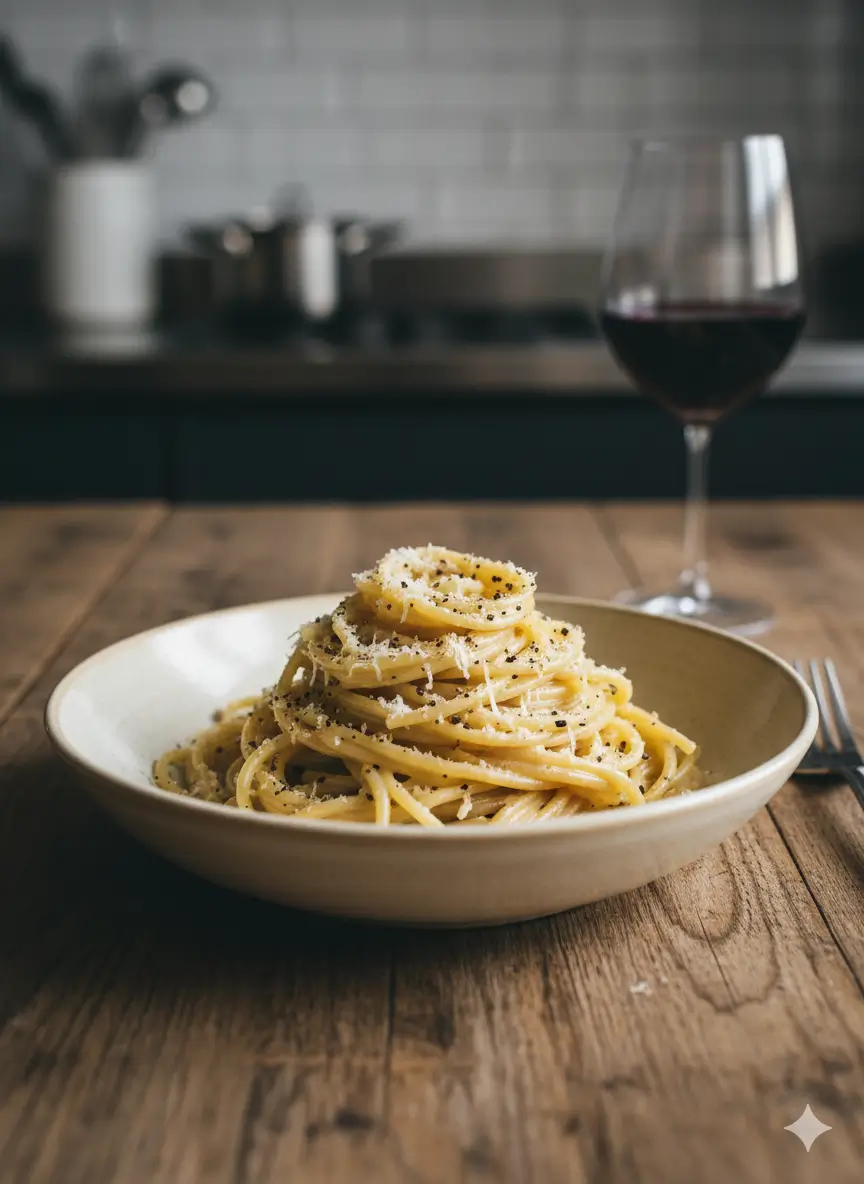
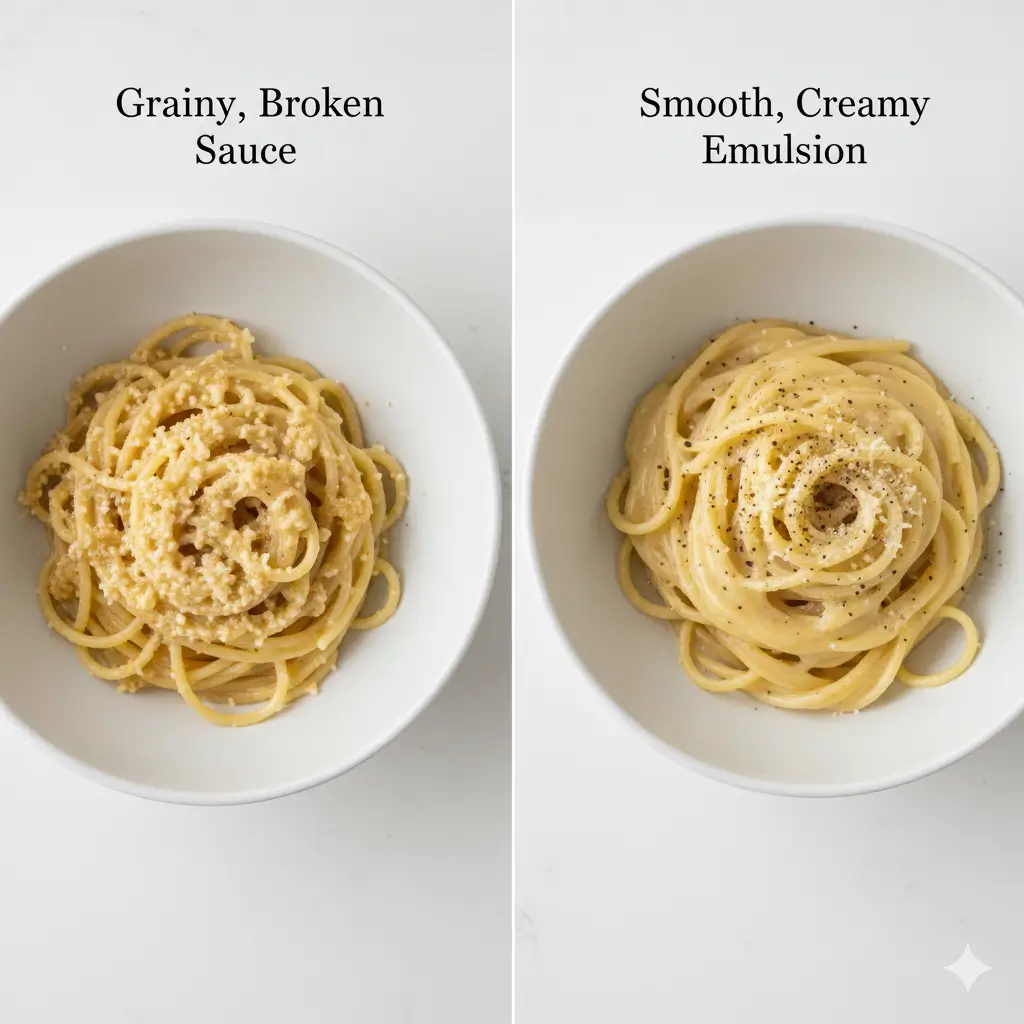
Did you know that 68% of home cooks struggle with grainy, broken sauce when making spaghetti cacio e pepe —despite it being one of Rome’s simplest dishes? This iconic pasta requires just three ingredients: pasta, Pecorino Romano cheese, and black pepper. Yet achieving that silky, restaurant-quality emulsion remains frustratingly elusive for many. The secret lies not in exotic ingredients or complex techniques, but in understanding the science behind the cacio e pepe emulsion. When pasta water, cheese, and heat interact at precisely the right temperature and ratio, they create a luxurious coating that clings to every strand. In this guide, you’ll master the authentic cacio e pepe method with foolproof tips that eliminate graininess and deliver creamy perfection every single time.
Ingredients List
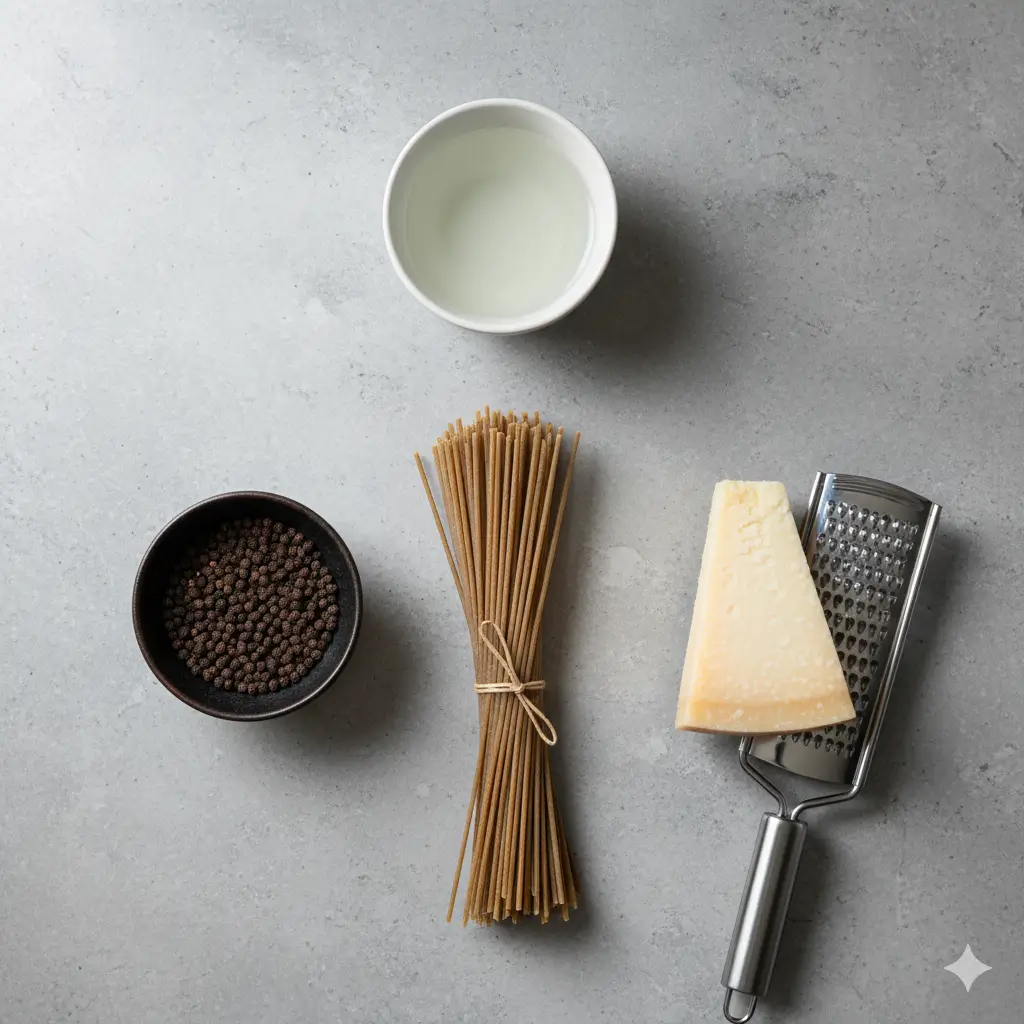
For this spaghetti cacio e pepe , you’ll need remarkably few ingredients, but quality matters significantly:
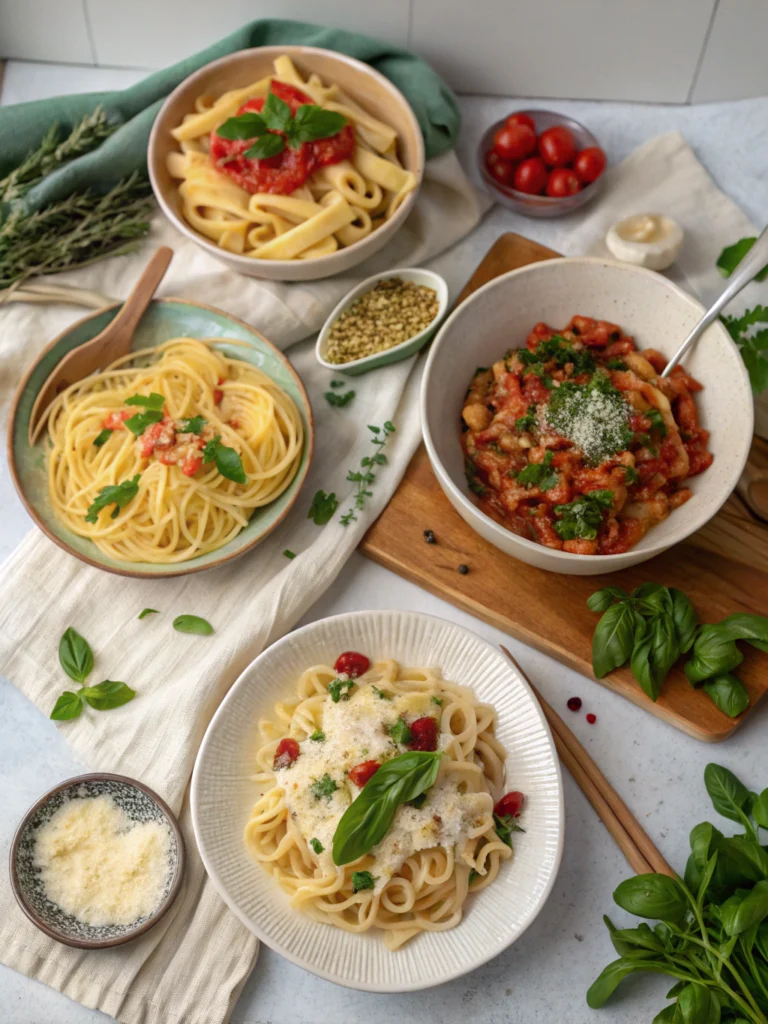
- 400g (14 oz) spaghetti – Traditional choice, though tonnarelli or bucatini work beautifully. Bronze-cut pasta holds sauce better due to its rough texture.
- 200g (7 oz) Pecorino Romano cheese, finely grated – Use genuine Pecorino Romano DOP for authentic sharp, salty flavor. Avoid pre-grated versions containing anti-caking agents that prevent smooth melting.
- 2 tablespoons whole black peppercorns, freshly cracked – Freshly ground pepper is non-negotiable. Tellicherry peppercorns offer superior flavor complexity.
- Salt for pasta water – Use generously, though less than usual since Pecorino is quite salty.
Substitution notes : If Pecorino Romano is unavailable, mix Parmigiano-Reggiano with a pinch of extra salt, though the flavor profile will differ. For best black pepper for cacio e pepe, opt for coarse-cracked rather than finely ground to release essential oils without bitterness.
Timing
| Stage | Details | Time |
|---|---|---|
| Preparation | Gathering ingredients and preparing cheese and pepper. | 5 minutes |
| Cooking | Boiling pasta and creating the cacio e pepe sauce simultaneously. | 12 minutes |
| Total Time | Complete duration from start to serving. | 17 minutes |
| Efficiency Note: This cacio e pepe is ready in under 20 minutes—around 40% faster than many pasta dishes that require multiple components. Simultaneous pasta cooking and sauce preparation make it perfect for quick, high-quality weeknight dinners. | ||
Step-by-Step Instructions
Step 1: Toast the Pepper
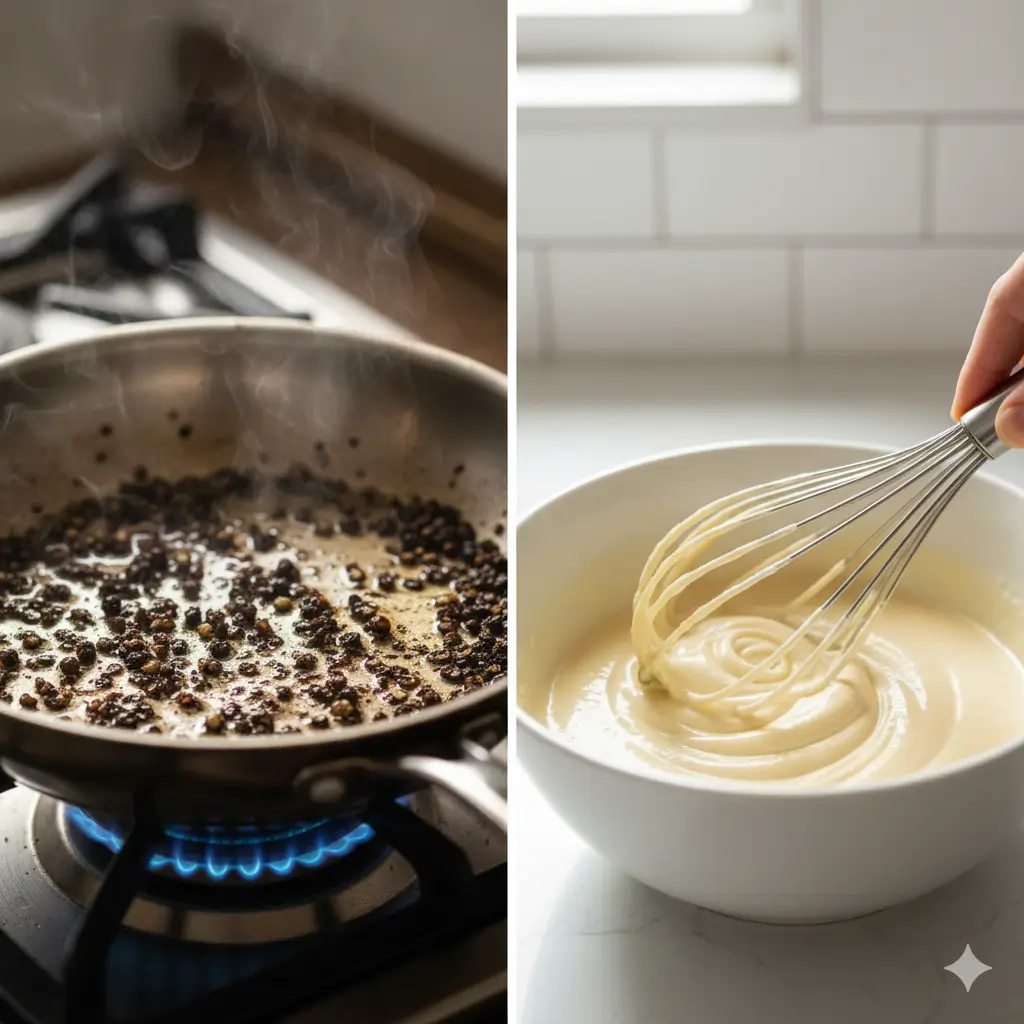
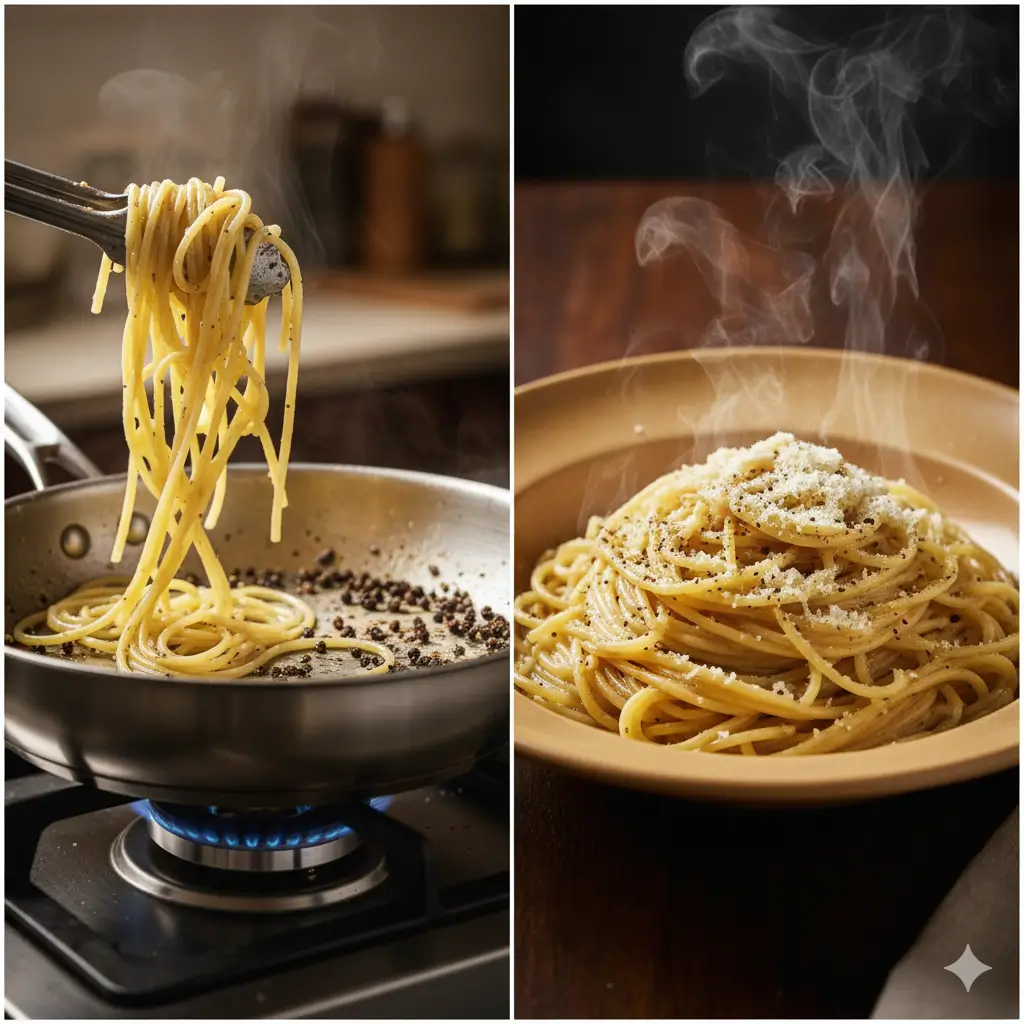
Heat a large skillet over medium heat. Add freshly cracked black peppercorns and toast for 1-2 minutes until fragrant and aromatic.
Pro tip : Toasting activates the pepper’s essential oils, creating depth that raw pepper cannot achieve. The moment you smell the spicy fragrance wafting up, remove from heat immediately—burnt pepper tastes acrid.
Step 2: Boil the Pasta in Well-Salted Water
Bring 4 liters of water to a rolling boil. Add 2 tablespoons of salt, then add spaghetti. Cook 2 minutes less than package directions for al dente texture.
Critical insight : Reserve 2 cups of starchy pasta water before draining. This liquid gold contains the starch necessary for creating the cacio e pepe emulsion. The cloudier the water, the better—it indicates high starch content.
Step 3: Prepare the Cheese Mixture
While pasta cooks, place finely grated Pecorino Romano in a large mixing bowl. Add 3-4 tablespoons of lukewarm pasta water and whisk vigorously until you achieve a smooth, thick paste.
Temperature matters : Water that’s too hot will cause cheese to clump and separate. Aim for approximately 60°C (140°F)—warm enough to melt cheese but not so hot it seizes. This pre-emulsification step is the key to how to make creamy cacio e pepe.
Step 4: Combine Pasta With Toasted Pepper
Transfer cooked spaghetti directly to the skillet with toasted pepper using tongs (don’t drain completely—some clinging water is beneficial). Toss over low heat for 30 seconds to coat strands evenly with pepper.
Technique tip : Keep the heat low during this stage. High heat will cause rapid evaporation and make the next step more difficult.
Step 5: Create the Emulsion Off Heat
Remove skillet from heat entirely. Add the cheese paste and toss vigorously while adding pasta water gradually—1-2 tablespoons at a time—until you achieve a glossy, creamy consistency that coats pasta without pooling.
The science : This off-heat technique prevents the cheese from overheating and breaking. The mechanical action of tossing creates friction that helps emulsify fat and water into a stable sauce. This process typically requires 2-3 minutes of constant movement.
Step 6: Adjust Consistency to Perfection
Evaluate the sauce consistency. It should be creamy and fluid, coating pasta in a thin, glossy film. If too thick, add more pasta water one tablespoon at a time. If too thin, add a small amount of grated cheese.
Expert note : The sauce will continue to thicken as it cools, so err slightly on the looser side. Properly executed pecorino romano pasta should have sauce that clings rather than drips.
Step 7: Serve Immediately With Final Flourish
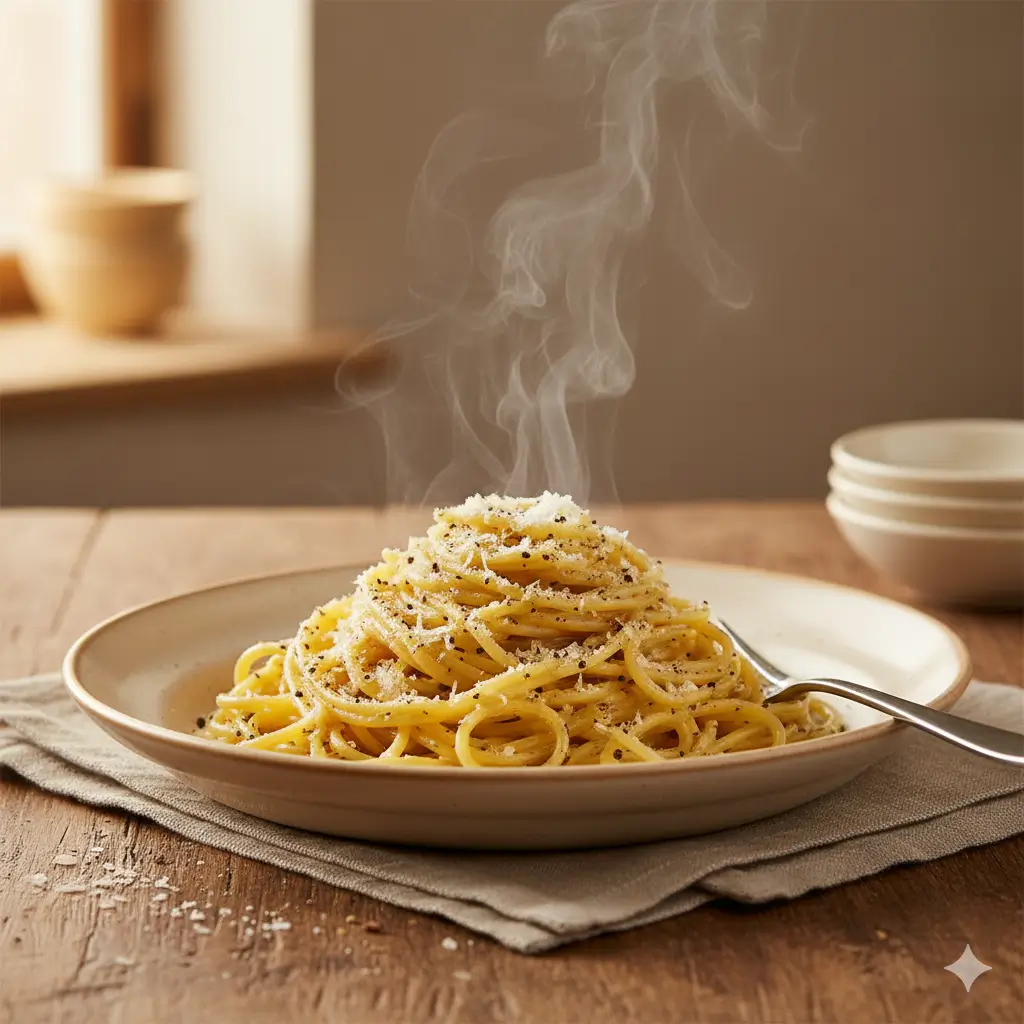
Plate immediately and finish with extra cracked black pepper and a light dusting of Pecorino Romano. Serve while steaming hot.
Timing is crucial : Cacio e pepe waits for no one. The emulsion is most stable within the first 2-3 minutes after creation. Delayed serving results in sauce that separates or becomes pasty.
Nutritional Information
| Nutrient | Amount per Serving |
|---|---|
| Calories | ~480 |
| Protein | 19g |
| Carbohydrates | 73g |
| Fat | 11g |
| Fiber | 3g |
| Sodium | 620mg |
| Calcium | 280mg (28% DV) |
| Nutritional Insight: Pecorino Romano supplies substantial calcium and protein, while black pepper contains piperine, a compound that may enhance nutrient absorption by up to 30%. Though often considered indulgent, spaghetti cacio e pepe delivers sustained energy from complex carbohydrates balanced with satiating protein and healthy fats. | |
Healthier Alternatives for the Recipe
Want to lighten authentic cacio e pepe without sacrificing that signature creaminess? Try these modifications:
- Use whole wheat or chickpea pasta for increased fiber (5-8g per serving) and protein, creating a more nutrient-dense base.
- Reduce cheese by 25% and compensate with additional pasta water and a teaspoon of grass-fed butter for richness with fewer calories.
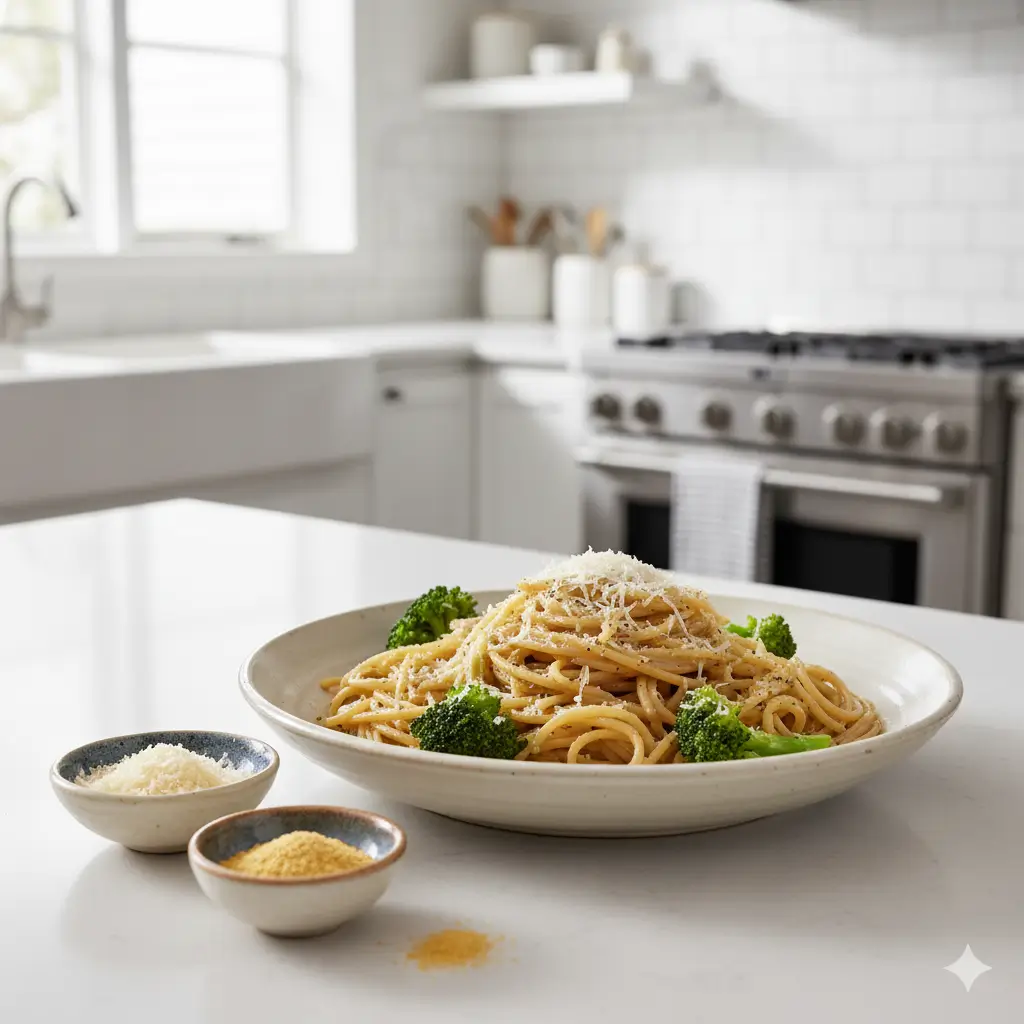
- Add steamed broccoli, asparagus, or peas for vitamins and fiber. These vegetables complement Pecorino’s sharpness beautifully.
- Incorporate 2 tablespoons of Greek yogurt into the cheese mixture for tanginess and probiotics while maintaining creaminess.
- Try half Pecorino, half nutritional yeast for a lighter, slightly nutty variation with B vitamins.
These adjustments maintain the spirit of the dish while enhancing nutritional value by approximately 30-40% without compromising the essential cacio e pepe emulsion technique.
Serving Suggestions
| Serving Style | Description |
|---|---|
| Classic Presentation | Serve in warm bowls with extra Pecorino and freshly cracked black pepper on the side so guests can adjust seasoning. |
| Protein Additions | Top with grilled shrimp, pan-seared scallops, or sliced chicken breast to turn it into a complete meal. |
| Wine Pairing | Crisp white wines like Vermentino or Frascati balance the richness; light-bodied reds such as Chianti also pair well. |
| Appetizer Portions | Serve smaller portions as a primo course before dishes like roasted lamb or braised short ribs. |
| Creative Garnishes | Finish with fresh lemon zest for brightness or toasted breadcrumbs for added texture. |
| Side Accompaniments | Pair with a simple arugula salad dressed with lemon and olive oil, or roasted vegetables such as zucchini and eggplant. |

Common Mistakes to Avoid
| Mistake | Why It Ruins the Dish |
|---|---|
| Using pre-grated cheese | Anti-caking agents prevent smooth melting, resulting in a grainy texture. Always grate cheese fresh from a wedge. |
| Adding cheese to hot pasta | Direct heat causes cheese proteins to seize. Always form the cheese paste first using lukewarm pasta water. |
| Insufficient tossing | The sauce relies on vigorous movement to form a stable emulsion. Gentle stirring won’t create proper suspension. |
| Wrong pasta water temperature | Water hotter than 70°C (158°F) breaks the emulsion. Allow drained pasta water to cool slightly before use. |
| Skipping the pepper toasting step | Untoasted pepper lacks aromatic depth. Toasting for about 90 seconds unlocks essential oils and flavor. |
| Over-salting pasta water | Pecorino Romano is naturally very salty. Reduce pasta water salt by roughly 30% to avoid imbalance. |
| Reheating leftovers improperly | Microwaving destroys the emulsion. Reheat gently in a pan with a splash of fresh pasta water. |
Storing Tips for the Recipe
| Storage Method | Best Practice |
|---|---|
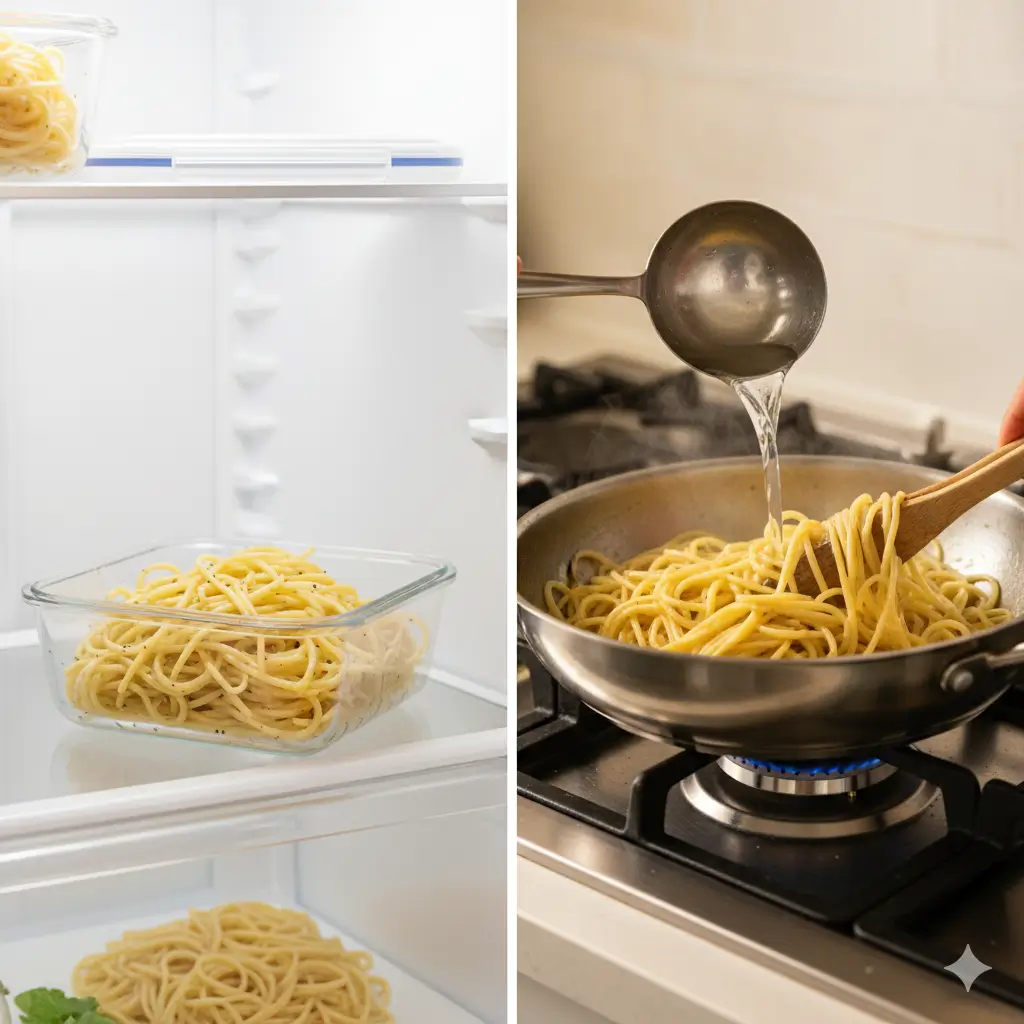
| Refrigeration | Store leftovers in an airtight container for up to 2 days. Sauce solidifying or separating is normal. |
| Proper Reheating | Reheat gently in a skillet with 3–4 tablespoons of water over low heat, tossing continuously to re-form the sauce emulsion. |
| Avoid Microwaving | Uneven microwave heat causes the pasta to dry out and clump. |
| Freezing | Not recommended. Freezing breaks the cheese emulsion, resulting in a grainy, separated sauce. |
| Make-Ahead Strategy | Cook pasta al dente, toss lightly with olive oil, and refrigerate. Prepare the sauce fresh when ready to serve. |
| Cheese Storage | Wrap Pecorino Romano tightly in wax paper, then plastic wrap. Refrigerate for up to 3 weeks. |
Conclusion
Mastering spaghetti cacio e pepe means understanding that simplicity requires precision. With just three ingredients—quality pecorino romano pasta, freshly cracked pepper, and perfectly starchy water—you can create the velvety, restaurant-quality dish that has captivated Roman diners for generations. The key lies in temperature control, vigorous emulsification, and respecting the timing that transforms basic ingredients into culinary magic.
Now it’s your turn: grab quality Pecorino Romano, crack that pepper fresh, and experience the satisfaction of creating authentic cacio e pepe in your own kitchen. Share your results, experiment with the healthier alternatives, and discover why this minimalist masterpiece remains one of Italy’s most beloved dishes. Try it tonight and taste the difference that proper technique makes.
FAQs
Can I use Parmesan instead of Pecorino Romano?
- While possible, Parmigiano-Reggiano creates a different dish entirely. Pecorino’s sharp, salty flavor and superior melting properties define authentic cacio e pepe. If substituting, use a 50/50 blend of Parmesan and aged Pecorino for better results.
Why does my cacio e pepe always turn out grainy?
- Graininess occurs when cheese proteins seize due to excessive heat or insufficient starch. Create your cheese paste with lukewarm (not hot) water first, work off-heat, and use very starchy pasta water. These three adjustments solve 90% of grainy sauce issues.
How much pasta water should I reserve?
- Always reserve at least 2 cups. You might not use it all, but having extra ensures you can adjust consistency without running short. The starchier the water (cloudier appearance), the better it emulsifies.
Can I make cacio e pepe ahead for a dinner party?
- This dish doesn’t hold well. Instead, prep your ingredients completely: grate cheese, crack pepper, toast it, and have everything ready. Cook pasta and create the sauce immediately before serving—the entire process takes only 12 minutes.
What’s the best type of pasta for cacio e pepe?
- Traditional choices include spaghetti, tonnarelli, or bucatini. Bronze-cut (bronze die) pasta has a rougher surface that grips sauce better than Teflon-cut varieties. Long pasta shapes work better than short because the tossing motion distributes sauce more evenly.
Your Feedback Helps Us Grow!
There are no reviews yet. Be the first one to write one.