Homemade Biscuit Recipe : 7 Steps to Fluffy Perfection
Table of Contents
🍪 Why This is the Best Homemade Biscuit Recipe You Will Ever Bake
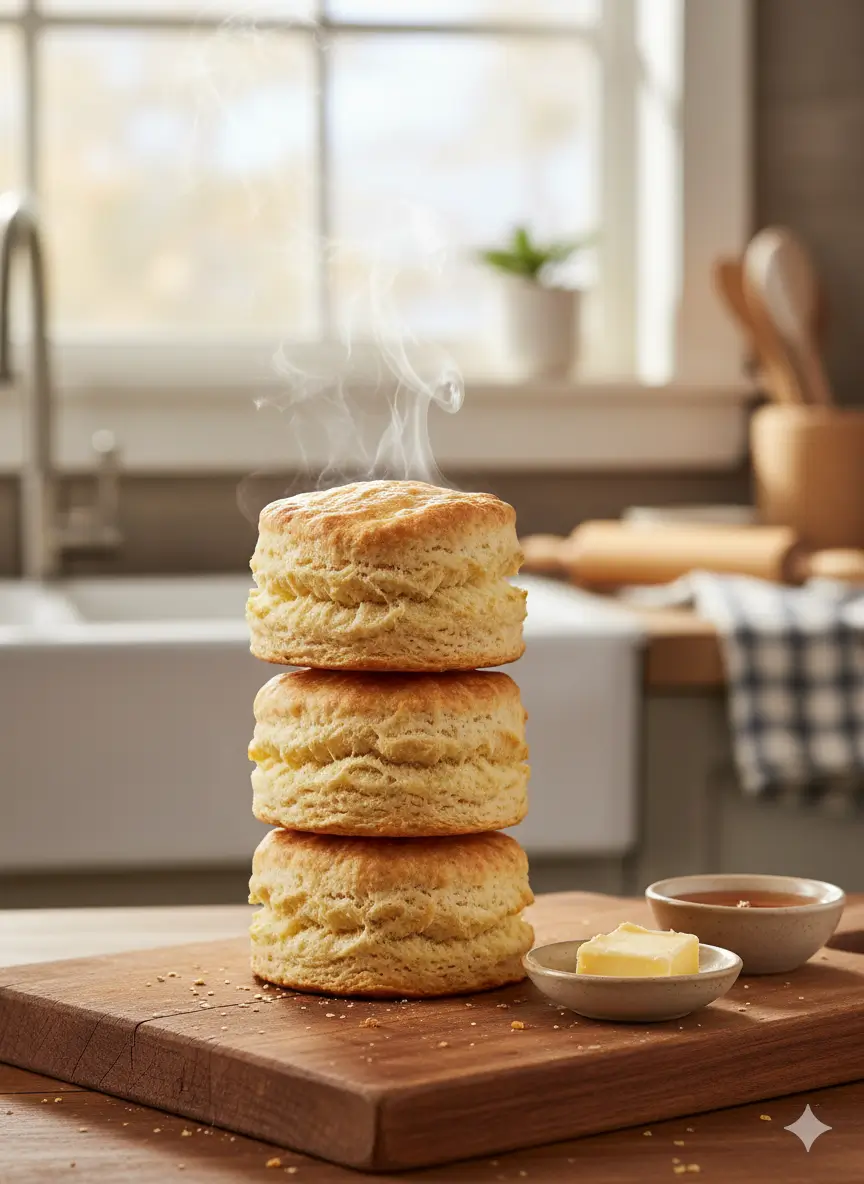
For many, the humble biscuit remains the ultimate baking challenge. Will they be flaky, or dense? Buttery, or dry? If you’ve been chasing that elusive, melt-in-your-mouth perfection, your search ends here. This homemade biscuit recipe isn’t just a set of instructions; it’s a masterclass in minimal effort for maximum reward. We’ve distilled decades of baking wisdom into a foolproof, 7-step process that guarantees results.
Forget tough, flat hockey pucks. We’re talking about sky-high, layered biscuits with that perfect golden crust and an interior so soft and fluffy it practically dissolves on your tongue. We’ll show you exactly how to achieve the lamination fold—the secret technique used by Southern grandmothers—to ensure every single bite is pure, buttery bliss. If you want the best homemade biscuit recipe possible, grab your apron; it’s time to start baking magic.
🧈 Ingredient Breakdown: The Key to Buttery, Flaky Success
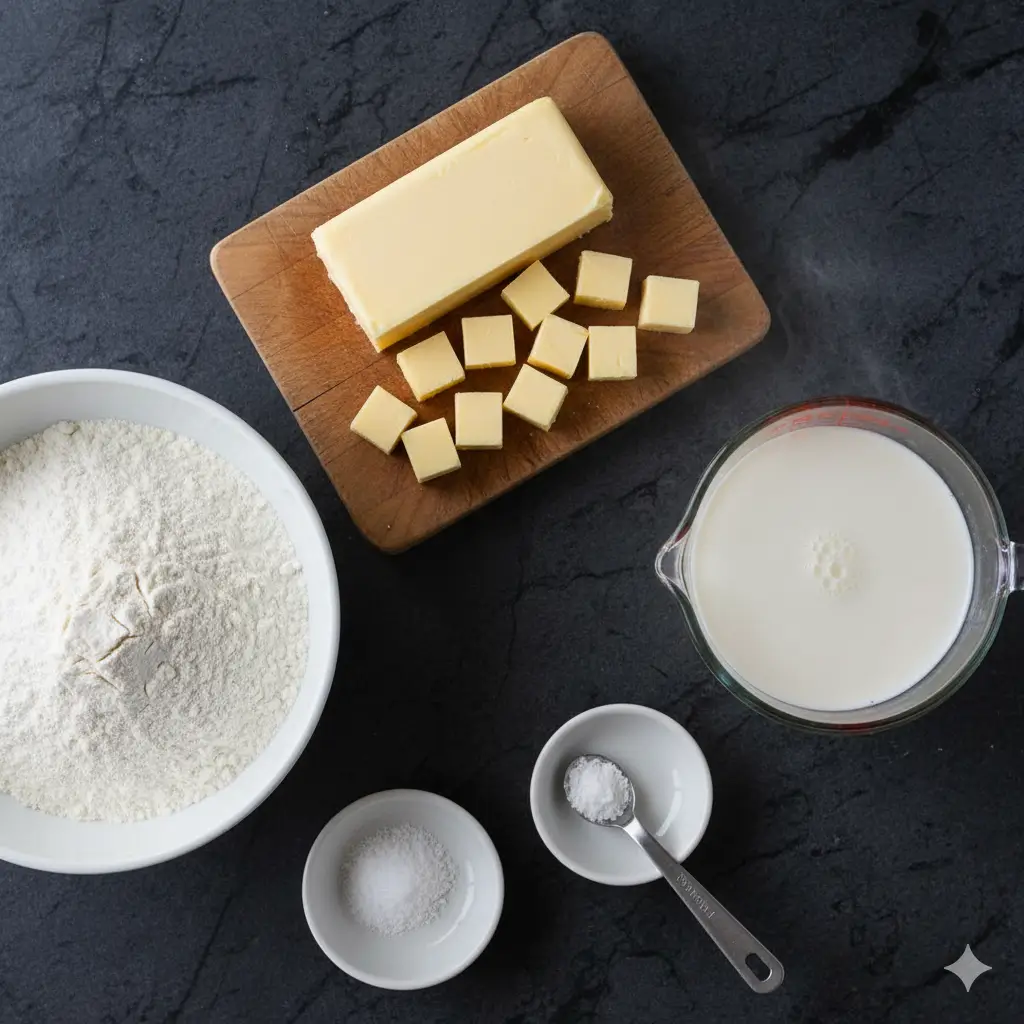
The secret to light, airy biscuits isn’t just in the technique; it’s in the careful selection and treatment of just a few simple, high-quality ingredients. For this homemade biscuit recipe, simplicity is key, but attention to detail is paramount.
The Essential Ingredients for Success
| Ingredient | Quantity | Notes for Flakiness |
|---|---|---|
| All-Purpose Flour | 2 cups | Use a mid-protein flour (not bread flour). Avoid scooping directly from the bag—spoon it into the measuring cup and level. |
| Baking Powder | 1 tablespoon | Ensure it’s fresh! Old baking powder leads to flat biscuits. |
| Salt | 1 teaspoon | Fine-grain salt is best. Balances the richness of the butter. |
| Cold Unsalted Butter | 8 tablespoons (1 stick) | Crucial: Must be frozen or fridge-cold. We’ll cut it into small cubes or grate it. |
| Cold Buttermilk | 3/4 cup | The acidity reacts with the baking powder, creating lift and a tangy flavor. |
The Importance of Cold Butter and Buttermilk
This point cannot be overstated: Temperature is your single most important variable.
The butter’s temperature is what creates those desirable layers. When tiny, cold pieces of butter hit the heat of the oven, they rapidly melt, releasing steam and pushing the dough layers apart. This process is called leavening. If your butter is too warm, it melts into the dough before baking, resulting in a dense, tough texture. Some experts even recommend freezing the cubed butter for 15 minutes before use. Similarly, cold buttermilk slows down the gluten development when mixing, preventing a tough dough. This combination ensures every biscuit achieves maximum volume and an incredibly tender crumb.
🍞 Step-by-Step: The 7-Step Master Plan for Light and Fluffy Biscuits
Follow these simple, yet precise steps, and you will unlock the secret to this perfect homemade biscuit recipe. Remember: work quickly to keep the ingredients cold.
Step 1: Combine Dry Ingredients
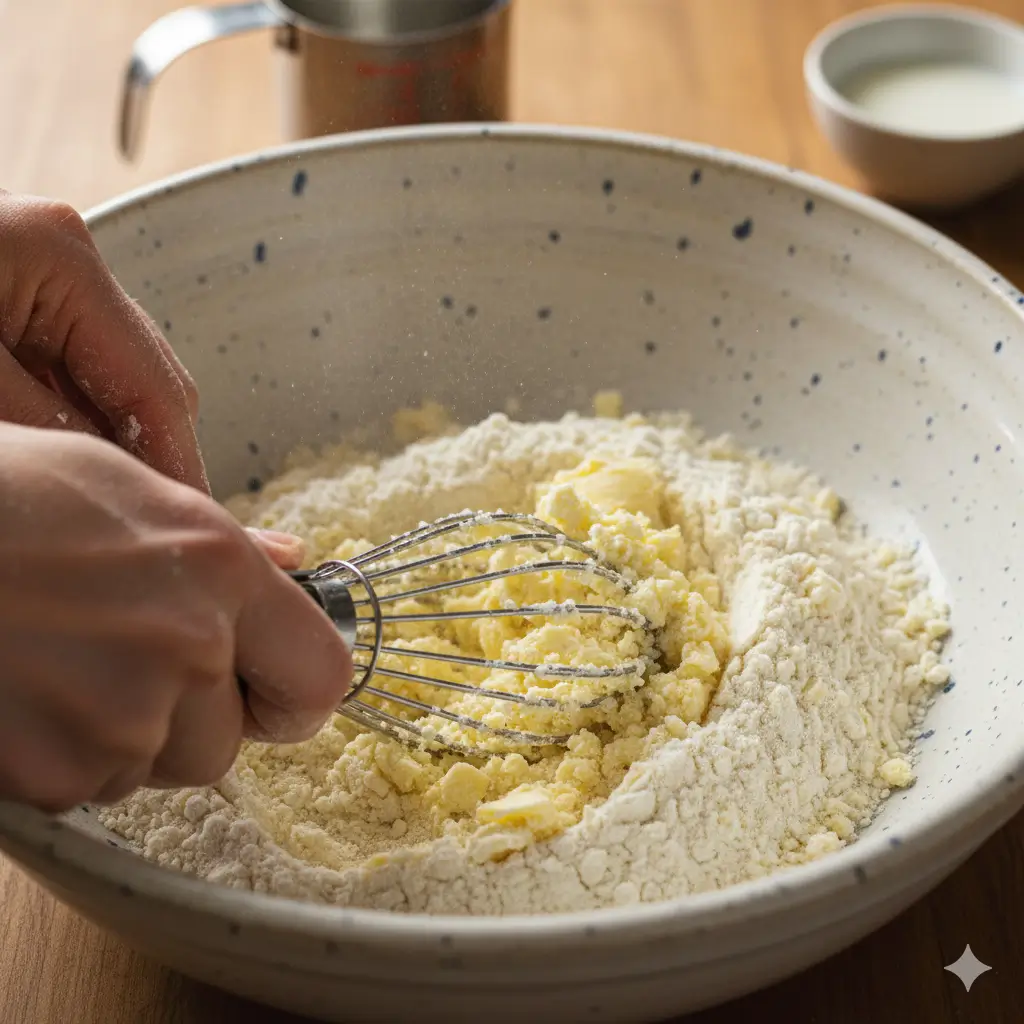
In a large mixing bowl, whisk together the flour, baking powder, and salt. Whisking not only combines them but also helps aerate the flour, which contributes to the final fluffy texture.
Step 2: Cut in the Cold Butter
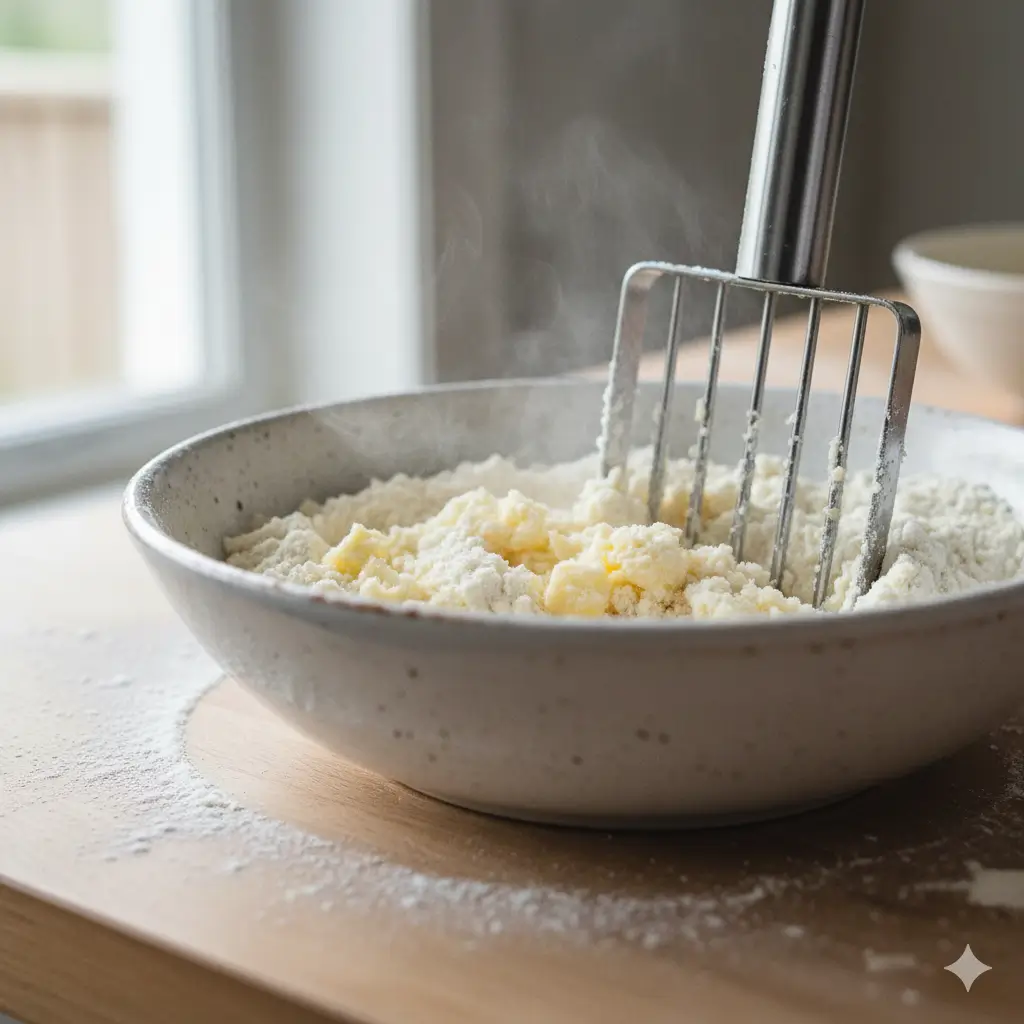
Add the cubed or grated cold butter to the dry mixture. Using your fingers, a pastry cutter, or a food processor (pulsed only 3-5 times), quickly work the butter into the flour. The goal is to have a mixture that resembles coarse sand with some pea-sized pieces of butter remaining. Do not over-mix; you must see pieces of butter. These solid pieces are the key to flakiness.
Step 3: Add the Buttermilk
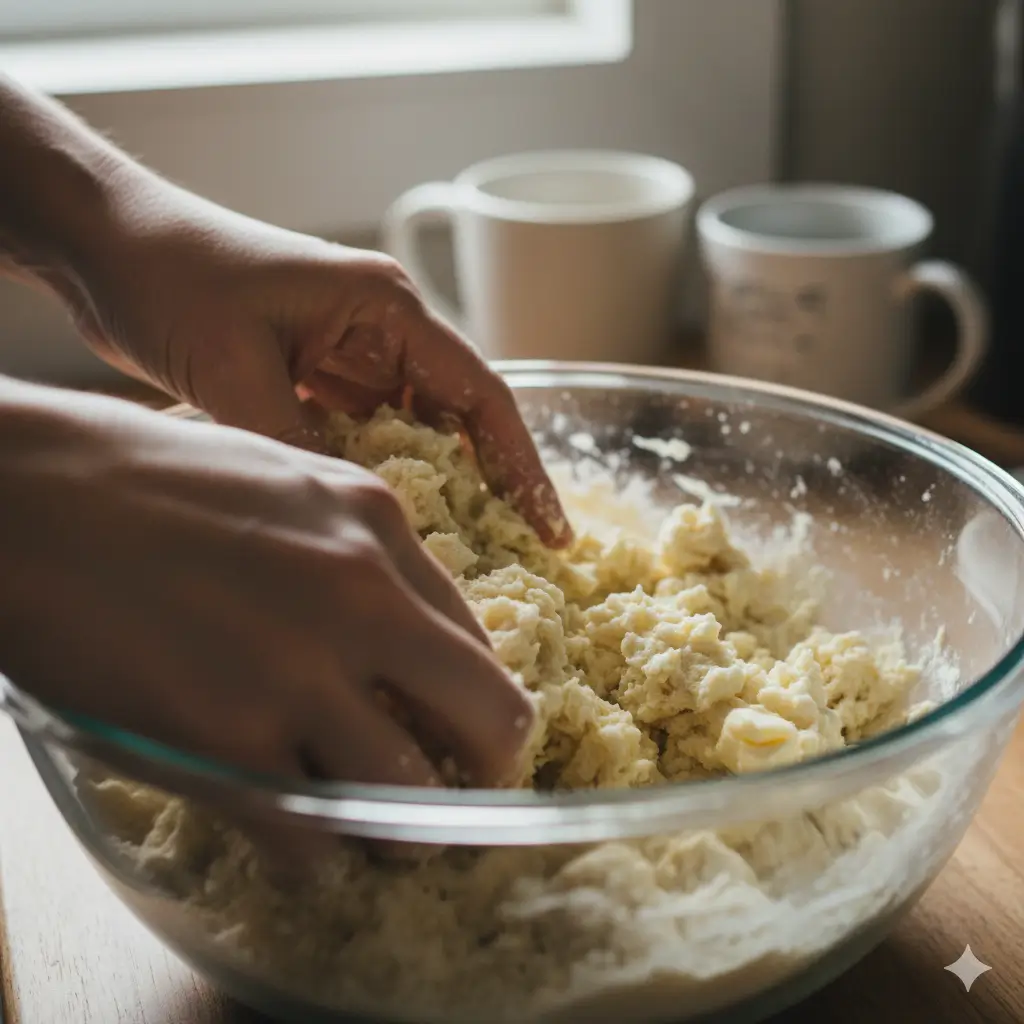
Pour the cold buttermilk into the flour-butter mixture. Use a wooden spoon or spatula to stir until just combined. The dough will look shaggy and sticky—that’s exactly right. Stop stirring immediately when all the flour is hydrated. Any further stirring develops gluten, which leads to tough biscuits.
Step 4: The Lamination Fold (The Secret to Flakiness)
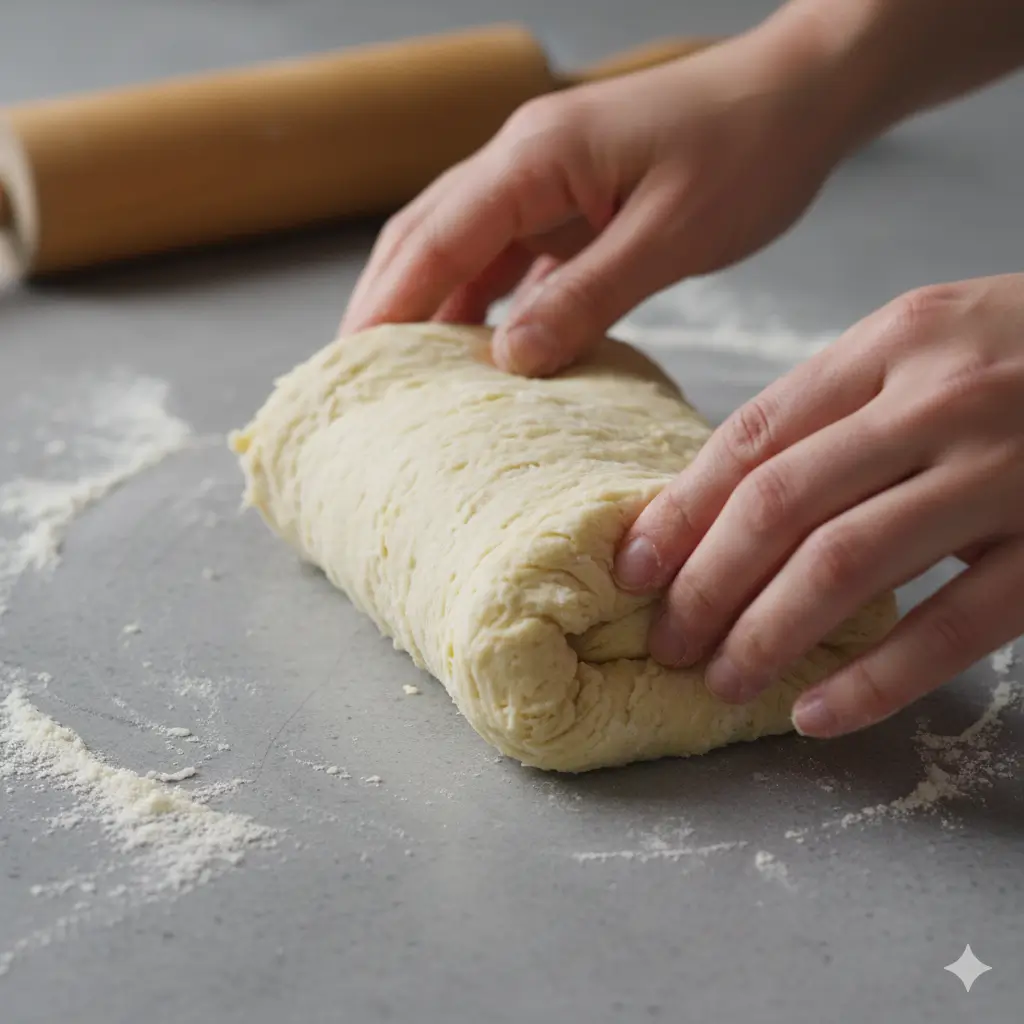
Lightly flour a clean surface. Dump the shaggy dough onto the surface. Gently pat it into a rough rectangle (about 1 inch thick). Now, perform the lamination fold:
- Fold one-third of the dough over the middle.
- Fold the remaining third over that, like folding a letter.
- Turn the dough 90 degrees and repeat the fold once or twice more.
This folding creates the necessary layers of butter and dough, ensuring that when they bake, they achieve those stunning flaky ribbons. After the last fold, gently pat the dough back into a 3/4-inch thickness.
Step 5: The Perfect Cut and Why You Should Never Twist
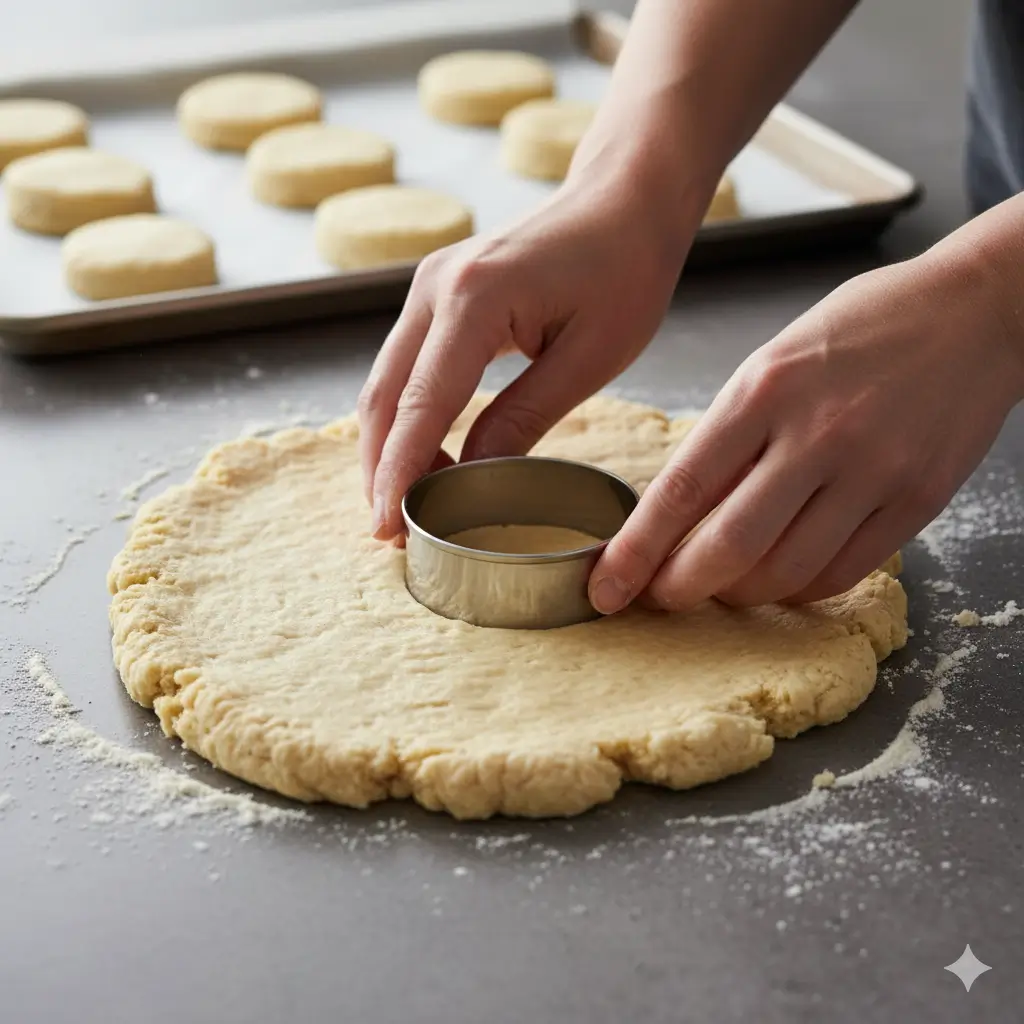
Using a 2-inch biscuit cutter (or the rim of a small glass), press straight down through the dough. Do not twist! Twisting seals the edges of the biscuit, preventing them from rising properly. Place the cut biscuits onto a baking sheet lined with parchment paper. For softer sides, place them close together; for crispier sides, space them 1 inch apart. Gently reroll and cut the scraps, but remember these final biscuits will be less tender.
Step 6: The Quick Chill
If time allows, place the sheet of cut biscuits in the freezer or fridge for 10-15 minutes. This quick chill ensures the butter is absolutely firm right before hitting the oven, maximizing the steam release and lift. Preheat your oven to a piping hot 425°F (220°C) during this time.
Step 7: Bake Until Golden Perfection
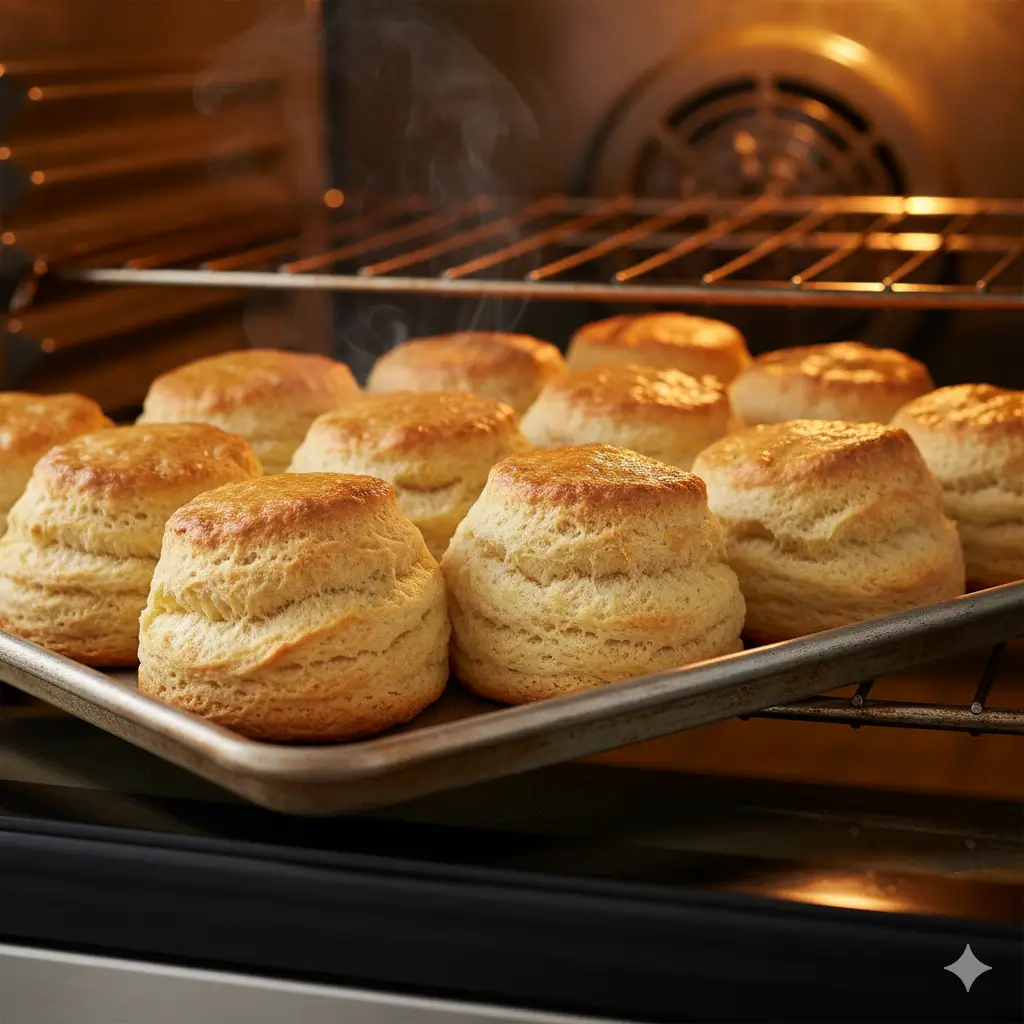
Brush the tops of the biscuits with a little melted butter or buttermilk for extra browning. Bake for 12 to 15 minutes. The biscuits are done when they have risen impressively high and the tops are a beautiful, light golden brown. Serve immediately.
💡 Troubleshooting: Why Your Biscuits Are Tough (And How to Fix It)
Even with the best homemade biscuit recipe, problems can arise. Two decades of baking have taught me that almost every biscuit failure boils down to one simple error. Knowing the diagnosis is half the battle.
| Problem | Cause | Expert Solution |
|---|---|---|
| Tough, Dense Texture | Over-mixing the dough. | When adding buttermilk, stop stirring the instant the flour disappears. Embrace the shaggy, sticky look. |
| Flat, Short Biscuits | Old leavening agent or warm butter. | Always check the date on your baking powder. Ensure butter is freezing cold before starting. |
| Uneven Rise / Lopsided | Twisting the cutter. | Press the cutter straight down firmly and lift straight up. This preserves the vertical layers created in the folding process. |
| Dry Crumble | Too much flour. | Spoon the flour into your measuring cup rather than scooping. This prevents packing and using excess flour. |
Tough Texture vs. Dry Crumble: Diagnosing Your Baking Issue
The biggest user pain point is the tough texture. This happens because you overworked the dough, developing too much gluten. Think of kneading bread—you want some gluten for structure, but in biscuits, you want almost none. The dough should be handled as little as possible. If your biscuits are instead dry and crumbly, the fault is usually with the dry ingredients. You either used too much flour, or you didn’t add enough buttermilk to hydrate the mixture fully. Always check your liquid measurements carefully to ensure that perfect, shaggy consistency before the folding stage. Addressing these factors ensures your next batch is successful and truly fluffy.
🧀 Delicious Variations: Taking Your Homemade Biscuit Recipe to the Next Level
Once you’ve mastered the classic version of this homemade biscuit recipe, it’s time to explore some exciting flavor variations. The base technique remains the same, but a few simple additions can completely transform your bake.
Cheese and Herb Biscuits
For a savory, appetizer-ready biscuit, add 1/2 cup of shredded sharp cheddar cheese and 1 tablespoon of fresh, finely chopped chives or dill along with the cold butter in Step 2. The cheese melts into the dough, creating pockets of richness and a beautiful savory aroma. Serve these alongside chili or soup.
Sweet Cinnamon Sugar Biscuits
For a breakfast treat, simply leave the tops unbrushed with butter before baking. Right out of the oven, brush the hot biscuits with melted butter and then generously dredge them in a mixture of 1/2 cup granulated sugar and 2 teaspoons of ground cinnamon. The heat from the biscuits absorbs the butter and allows the sugar mixture to adhere, giving you a quick, comforting morning pastry.
Whole Wheat Southern Biscuits
For a slightly nuttier, denser biscuit, substitute up to 1/2 cup of the all-purpose flour with whole wheat flour. This will make the dough slightly thirstier, so you may need to add an extra tablespoon or two of buttermilk until the shaggy consistency is reached. The whole wheat adds fiber and a depth of flavor that is wonderful with jams or honey.
🍽️ Final Thoughts: Enjoying Your Fluffy Perfection
You now possess the knowledge—and the simple, 7-step process—to bake truly extraordinary biscuits. This homemade biscuit recipe is designed to eliminate guesswork and deliver that deeply satisfying, buttery, flaky result every single time. Whether you serve them hot with country gravy, slathered in butter and jam, or simply straight from the oven, these biscuits are guaranteed to impress. There is nothing quite like the smell of a fresh batch of light and fluffy biscuits filling your kitchen. Don’t wait; gather those ingredients and experience biscuit perfection today!
Your Feedback Helps Us Grow!
There are no reviews yet. Be the first one to write one.