How to Keep Pesto Green Fresh for 7 Days Straight
Table of Contents
Why Your Pesto Turns Brown (And How to Stop It)
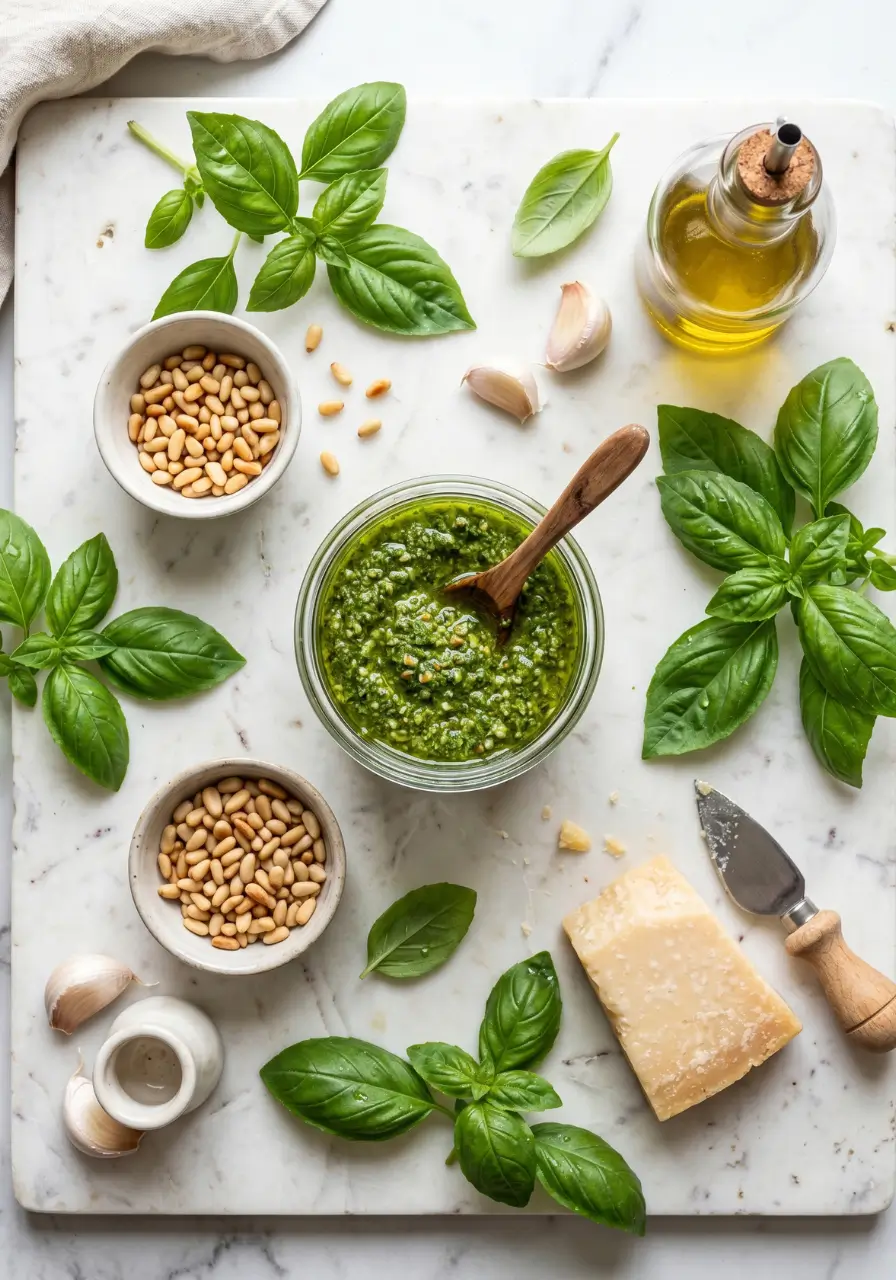
Have you ever made a gorgeous batch of fresh pesto , stored it in the fridge, and opened it the next morning to find an unappetizing brownish-gray paste staring back at you? You are definitely not alone. Knowing how to keep pesto green is one of the most searched kitchen questions among home cooks, and for good reason. Studies show that oxidation can begin discoloring basil-based sauces within as little as 30 minutes of exposure to air.
The good news? With a few simple, science-backed techniques, you can keep pesto green for a full 7 days or even longer. Whether you are storing homemade pesto or an opened store-bought jar, this guide has everything you need to preserve that vivid, garden-fresh color and flavor.
The culprit behind that dreaded brown pesto is oxidation. When basil leaves are crushed or chopped, enzymes called polyphenol oxidases react with oxygen in the air, triggering a browning process known as enzymatic browning. The same thing happens when you slice an avocado or a banana. But unlike those fruits, pesto contains several natural allies that can slow or even stop this process in its tracks.
Pro Tip : Blanching basil leaves in boiling water for 15 seconds before blending is one of the most effective tricks to prevent pesto oxidation and keep your sauce vibrant green.
What You Need to Keep Pesto Green
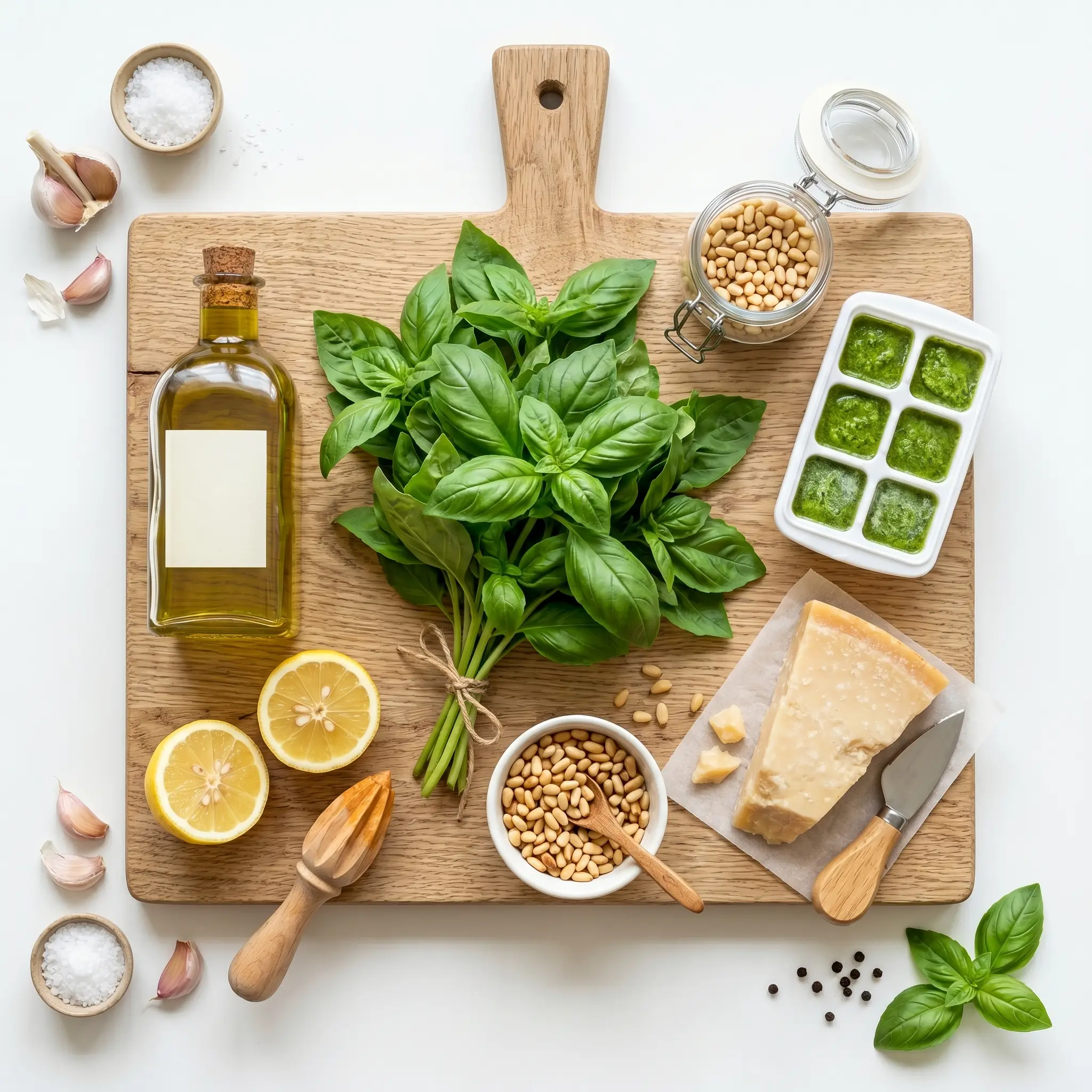
You do not need any fancy equipment or special additives. Most of these items are already in your kitchen :
- Fresh basil leaves (the more vibrant, the better)
- Extra virgin olive oil (a generous layer is your best friend)
- Lemon juice or ascorbic acid (Vitamin C is a natural antioxidant)
- Airtight glass jar or container with a tight-fitting lid
- Plastic wrap (for direct surface contact storage)
- Ice water bath (for blanching technique)
- Freezer-safe containers or ice cube trays (for long-term storage)
- Small saucepan (if using the blanching method)
Optional but helpful :
- Vacuum sealer for extended freshness
- Nitrogen spray (used by professional chefs to eliminate oxygen)
- Dark-tinted glass jars to block light exposure
Time Required to Prep and Store Pesto
From fresh basil to perfectly stored pesto in under 25 minutes
| Task or Storage Window | Time / Duration |
|---|---|
| Blanching Method Prep Time | 5 to 10 minutes |
| Standard Pesto Making Time | 10 to 15 minutes |
| Total Time (including storage setup) | 20 to 25 minutes |
| Active Freshness Window (refrigerated) | Up to 7 days |
| Active Freshness Window (frozen) | Up to 3 months |
Compared to simply blending and storing pesto without any protective measures, these techniques add only about 10 extra minutes but extend freshness by up to 6 additional days. That is a 600 percent improvement in shelf life for less than a quarter hour of effort.
Step-by-Step Instructions to Keep Pesto Green
Step 1 : Blanch Your Basil Leaves
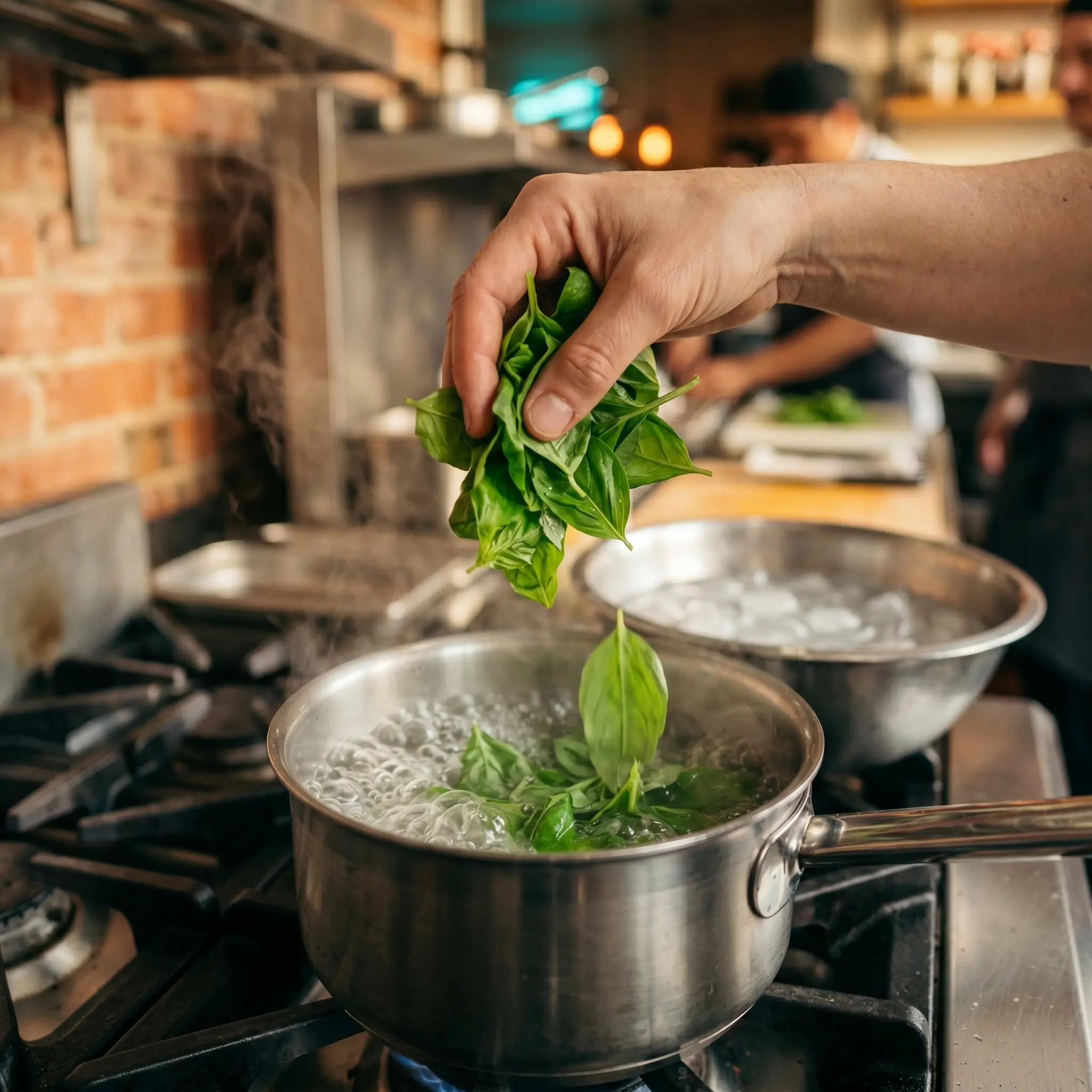
Bring a small pot of water to a rolling boil. Drop your fresh basil leaves in for exactly 15 seconds, then immediately transfer them to an ice water bath. This quick blanching deactivates the polyphenol oxidase enzymes responsible for browning. Pat the leaves completely dry before blending. Your pesto will be noticeably more vibrant and will hold its color far longer.
Pro Tip : Do not skip the ice bath. It stops the cooking instantly and locks in that brilliant green chlorophyll.
Step 2 : Add Lemon Juice to Your Pesto
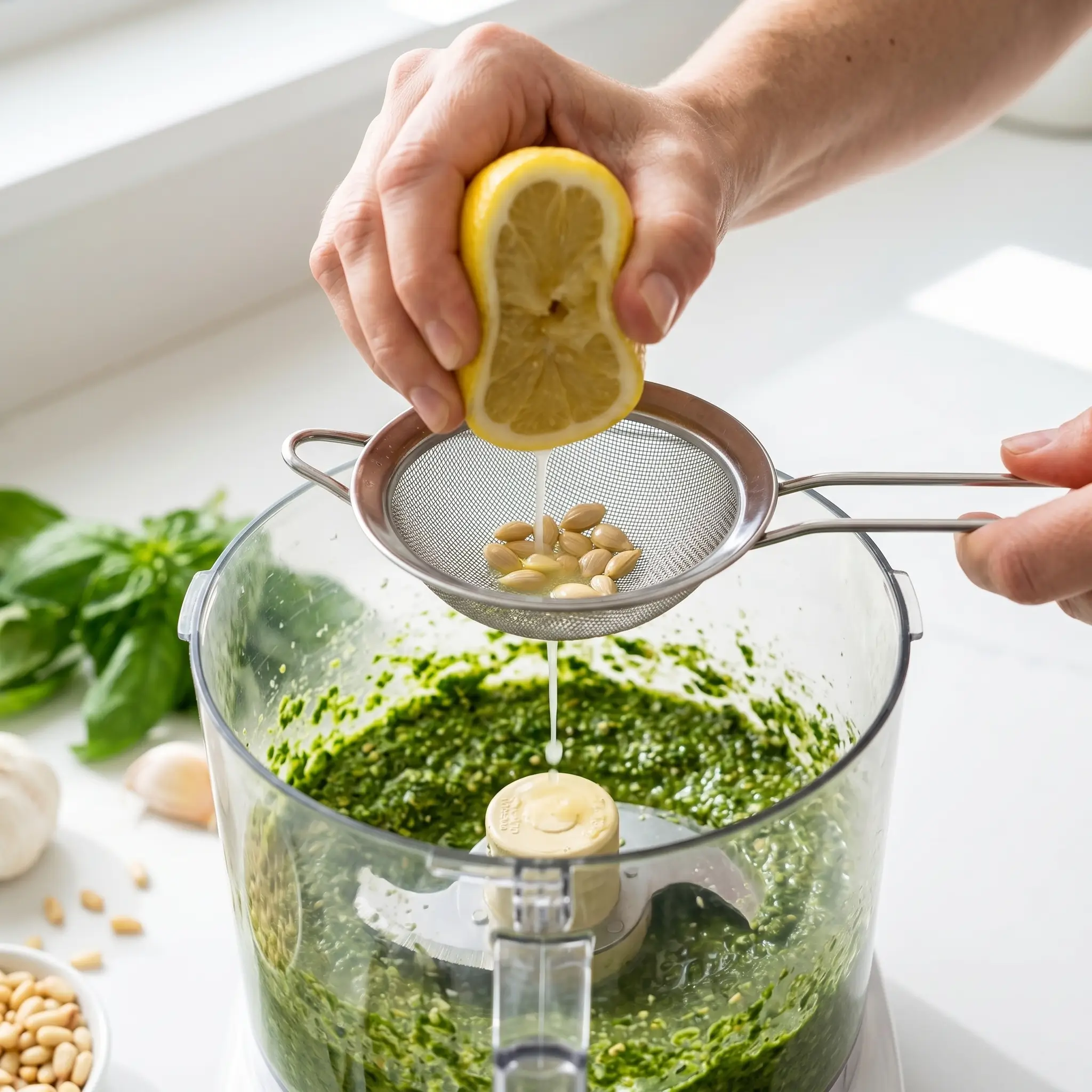
A teaspoon of fresh lemon juice per cup of pesto acts as a natural preservative. The ascorbic acid (Vitamin C) in lemon juice competes with oxygen at the enzyme level, effectively slowing the browning reaction. You can also use a small pinch of citric acid powder if you prefer a more neutral flavor impact. Either way, this single ingredient can make a noticeable difference in keeping pesto green for days.
Step 3 : Seal the Surface With Olive Oil
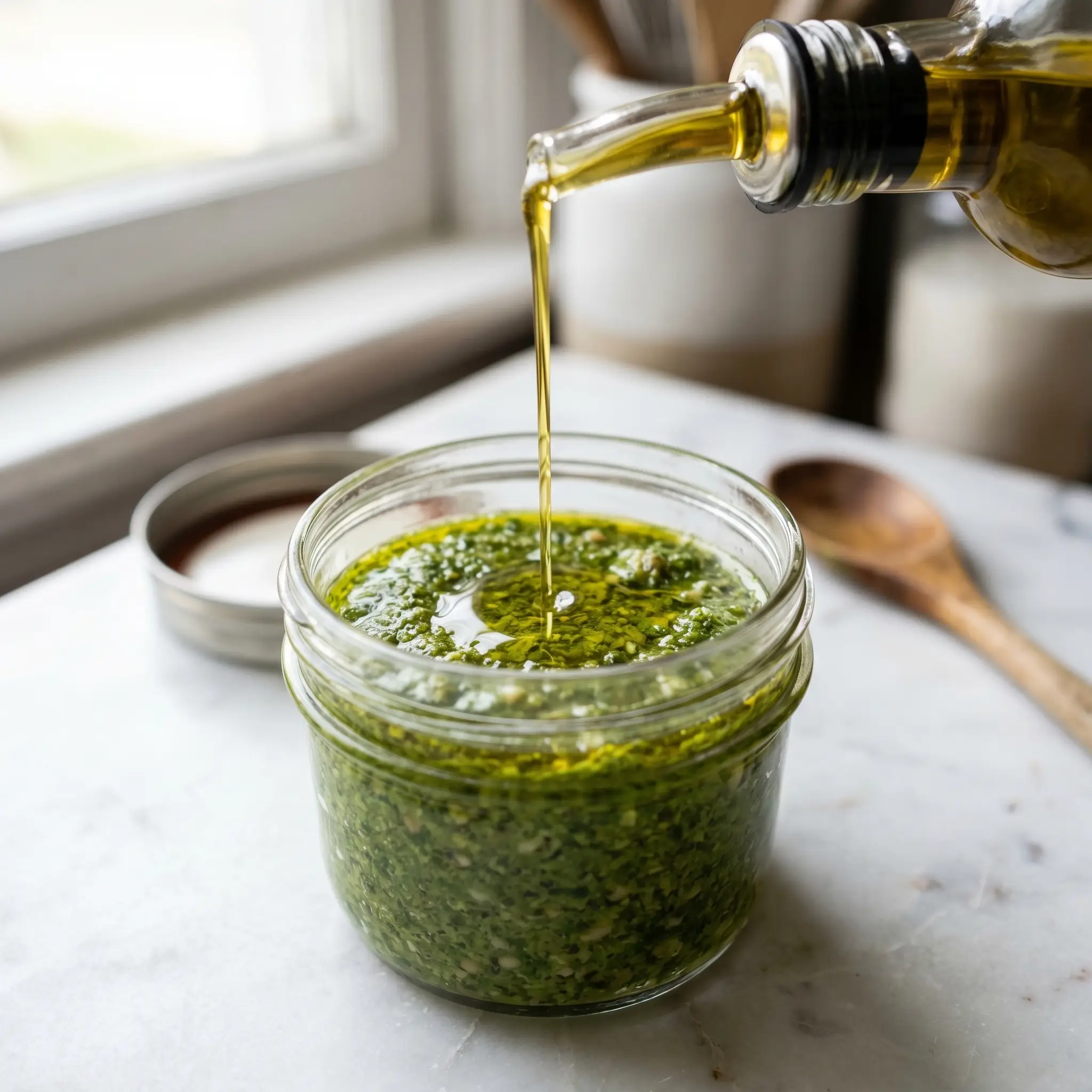
Once your pesto is blended and transferred to its storage container, smooth the surface flat and pour a thin, even layer of extra virgin olive oil directly on top. This olive oil barrier creates a physical seal between your pesto and the air above it, dramatically slowing oxidation. Use approximately one to two tablespoons for a standard pint-sized jar.
Pro Tip : After each use, re-apply a fresh layer of olive oil before returning the container to the fridge. This is the single most effective daily habit to prevent pesto from browning.
Step 4 : Use Plastic Wrap as a Direct Contact Cover
Before closing the lid of your container, press a layer of plastic wrap directly onto the surface of the pesto itself. This eliminates any air pockets sitting between the pesto and the lid. Combined with the olive oil layer in Step 3, this double-barrier method is extremely effective for pesto storage tips that actually work.
Step 5 : Store in an Airtight Container in the Coldest Part of Your Fridge
Temperature matters. Store your pesto in the back of the refrigerator, which tends to be the coldest and most stable zone. Avoid the door shelves where temperatures fluctuate every time you open the fridge. A temperature between 34 and 38 degrees Fahrenheit is ideal. A tightly sealed glass jar is preferable to plastic, as glass is non-reactive and does not absorb odors.
Step 6 : Freeze for Long-Term Green Pesto Storage
If you want to keep pesto fresh longer than 7 days, freezing is your best option. Spoon pesto into an ice cube tray, freeze until solid, then transfer the cubes into a zip-lock freezer bag. Each cube equals roughly one to two tablespoons, making it incredibly convenient to grab just the amount you need. Frozen pesto retains its color and flavor beautifully for up to 3 months.
Pro Tip : Pour a small drop of olive oil on each ice cube before freezing to maintain that brilliant green color even after thawing.
Step 7 : Thaw Pesto the Right Way
Never microwave pesto to thaw it. The heat destroys the delicate herbs and accelerates browning. Instead, transfer a frozen cube to a small bowl and let it thaw at room temperature for 20 to 30 minutes, or place the sealed bag in a bowl of cool water. Stir gently once thawed, and add a tiny drizzle of fresh olive oil to restore its glossy, green appearance.
Nutritional Information (Per 2-Tablespoon Serving)
Classic basil pesto: nutrient-dense, rich in healthy fats and antioxidants
| Total Fat | 16g |
High in heart-healthy monounsaturated fats | |
| Saturated Fat | 2.5g |
| Carbohydrates | 2g |
| Protein | 3g |
| Sodium | 180mg |
| Vitamin K | 35% DV |
Supports bone health and blood clotting | |
| Vitamin A | 12% DV |
The high olive oil content in pesto provides heart-healthy monounsaturated fats, and fresh basil is exceptionally rich in Vitamin K, which plays a key role in supporting bone health and blood clotting function.
Healthier Alternatives and Creative Variations
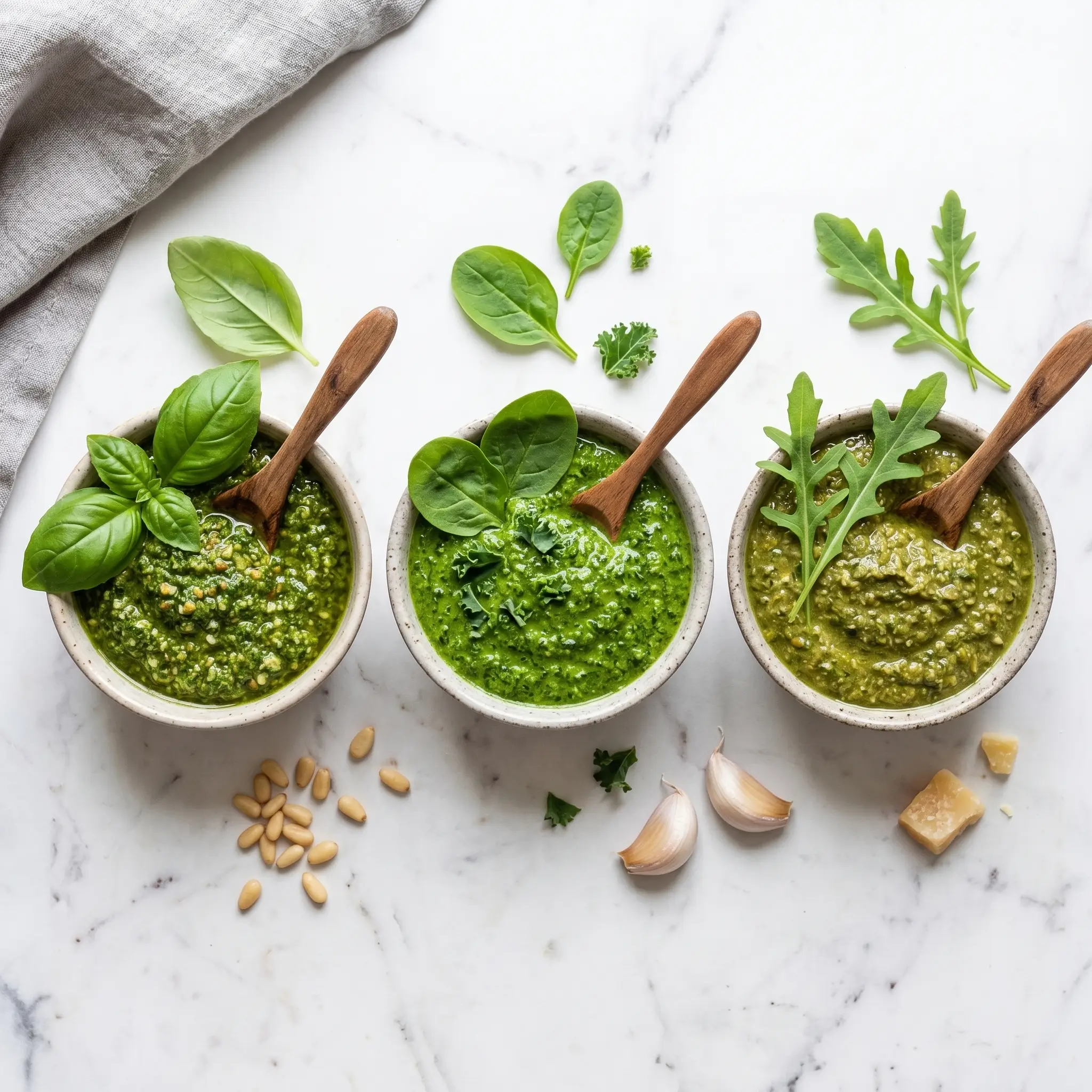
Looking to lighten up your pesto or adapt it for dietary needs? These swaps keep it fresh and flavorful while boosting its nutritional profile :
- Replace half the basil with baby spinach or kale for added iron and a deeper green color that is naturally more resistant to browning
- Swap pine nuts for walnuts or sunflower seeds to increase omega-3 fatty acids and reduce cost
- Use nutritional yeast instead of Parmesan for a dairy-free, vegan-friendly option with a cheesy, umami flavor
- Substitute half the olive oil with avocado for a creamier texture and extra healthy fats
- Add a handful of fresh mint or parsley alongside basil for a more complex herbal profile and added antioxidants
- Use arugula as a base for a peppery, low-calorie pesto variation with excellent color stability
Pro Tip : Spinach-based pesto stays green significantly longer than pure basil pesto because spinach contains less polyphenol oxidase. Consider blending in a handful of spinach for both color stability and nutritional value.
Serving Suggestions
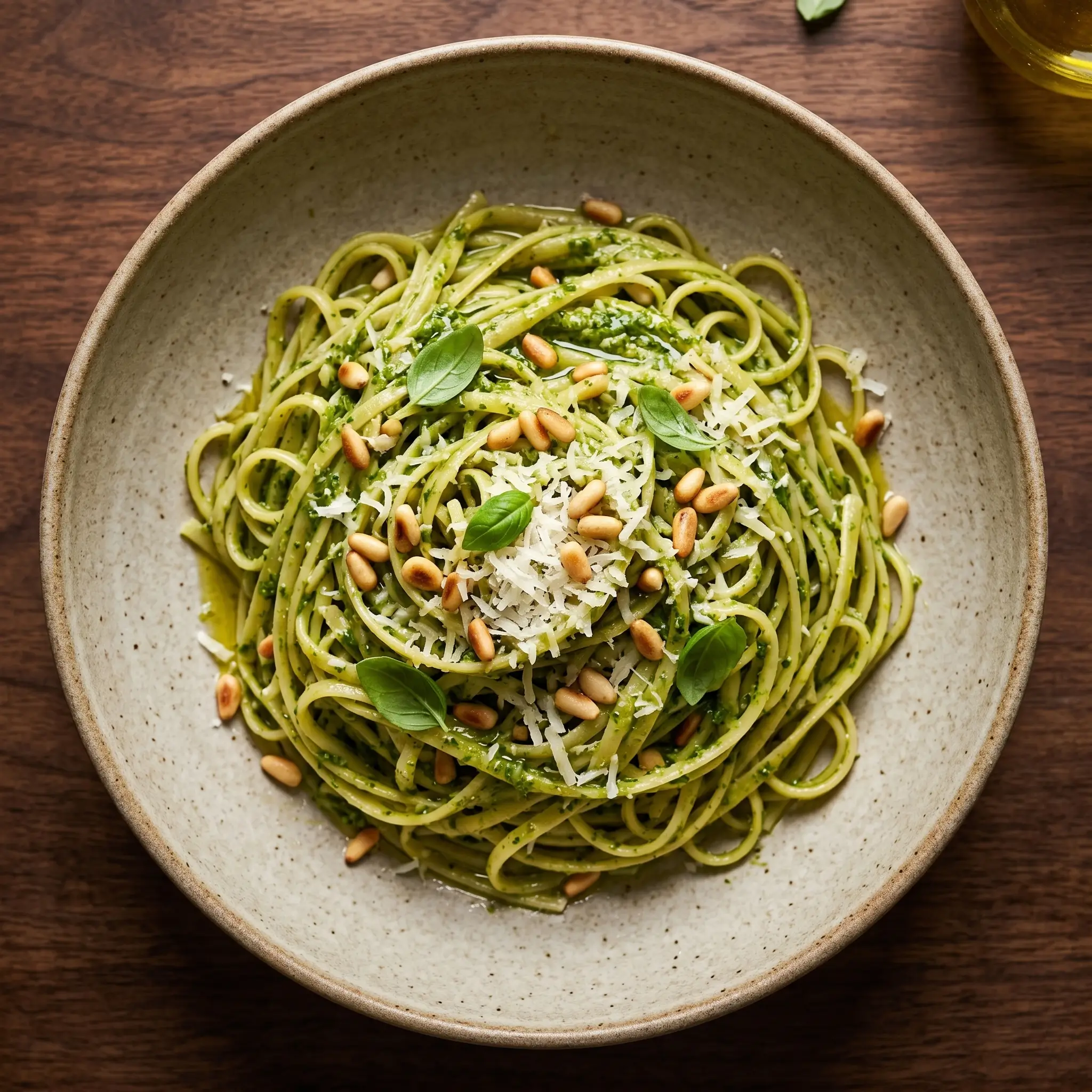
Fresh, vibrant green pesto elevates so many dishes beyond just pasta
Classic Pasta Toss
Toss with freshly cooked pasta and a splash of pasta water for a quick, creamy weeknight dinner.
⏱ 15 min mealPesto Bruschetta
Spread on toasted sourdough and top with sliced heirloom tomatoes and fresh mozzarella.
🌟 Crowd favoriteGrilled Chicken or Salmon Marinade
Use as a marinade for grilled chicken or salmon for an herby, deeply flavorful crust.
🔥 High proteinGourmet Eggs and Frittatas
Swirl into scrambled eggs or frittatas for a gourmet breakfast with minimal effort.
🌅 Breakfast upgradeTomato Soup Garnish
Dollop onto a bowl of tomato soup as a fragrant, colorful garnish that transforms a simple bowl.
🎨 Beautiful presentationInstant Herb Aioli
Mix into mayonnaise or Greek yogurt for an instant herb aioli perfect for sandwiches and dipping.
✨ 2-minute sauceRoasted Vegetables Drizzle
Drizzle over roasted zucchini, eggplant, or bell peppers straight from the oven for vibrant flavor.
🌿 Vegan-friendlyCreamy Pesto Risotto
Stir into risotto during the last minute of cooking for incredible depth of flavor and color.
👨🍳 Chef movePro Tip: Always add pesto off the heat or at the very last moment. High temperatures destroy the delicate basil flavor and cause that brilliant green color to fade. Stir it in, plate immediately, and enjoy every vibrant bite.
Common Mistakes to Avoid
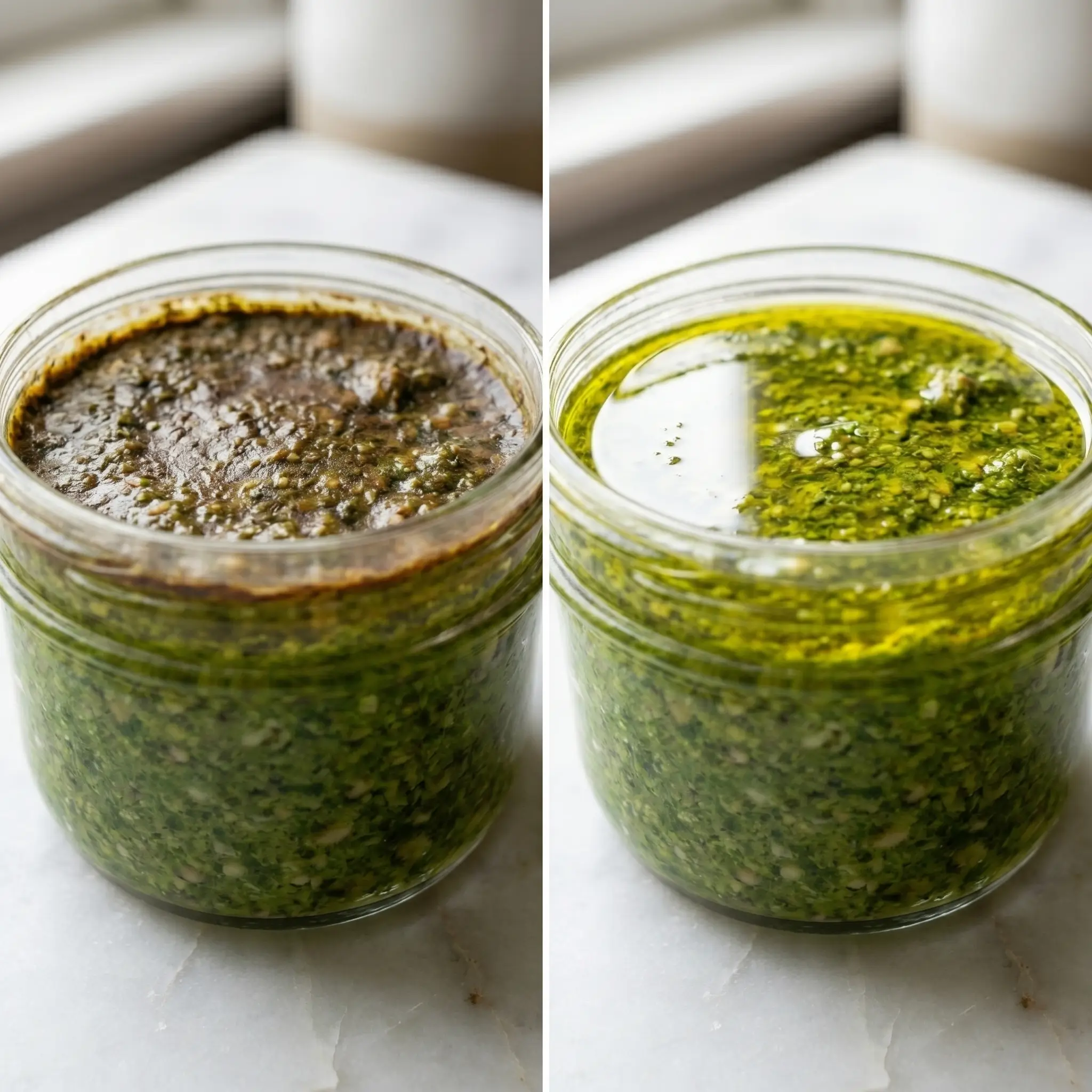
Keep your pesto vibrant, fresh, and full of flavor with these proven storage methods
Use an Airtight Glass Jar
Glass is non-reactive and odor-free. Choose a jar sized to your batch to minimize air space above the pesto.
✅ Best container choiceAlways Add an Olive Oil Seal
Pour a thin layer of extra virgin olive oil directly onto the pesto surface after every use to block air contact.
⭐ Most effective daily habitFreeze in Ice Cube Trays
Spoon pesto into ice cube trays, freeze solid, then transfer to a zip-lock bag. Each cube equals 1 to 2 tablespoons.
🗓 Lasts up to 3 monthsStore at the Back of the Fridge
The back of the fridge stays coldest and most stable. Avoid door shelves where temperature fluctuates with every opening.
🌡 34 to 38 F ideal rangePress Plastic Wrap Directly on Surface
Lay plastic wrap flush against the pesto before sealing the lid. This double-barrier method eliminates air pockets entirely.
🛡 Double air barrierNever Microwave to Thaw
Heat destroys fresh basil and accelerates browning. Always thaw at room temperature or in a bowl of cool water instead.
⚠ Avoid heat when thawingBlock Light Exposure
Light accelerates oxidation. Use dark-tinted glass jars or wrap your clear container before storing it in the fridge.
🔒 Locks in green colorAlways Use a Clean Container
Residue from previous batches introduces bacteria that accelerate spoilage. Use a fresh, dry container every single time.
🧫 Prevents contamination| Storage Method | Duration | Color Preservation |
|---|---|---|
| Fridge, no oil layer | 1 to 2 days | Poor |
| Fridge, with oil layer | 5 to 7 days | Good |
| Fridge, oil + plastic wrap | Up to 7 days | Excellent |
| Freezer, ice cube method | Up to 3 months | Very Good |
| Vacuum sealed, fridge | Up to 10 days | Excellent |
For meal preppers and batch cookers, the freezer ice cube method is the best way to store homemade pesto long-term. Grab exactly what you need, when you need it, with zero waste and maximum freshness every time.
Storing Tips for Pesto
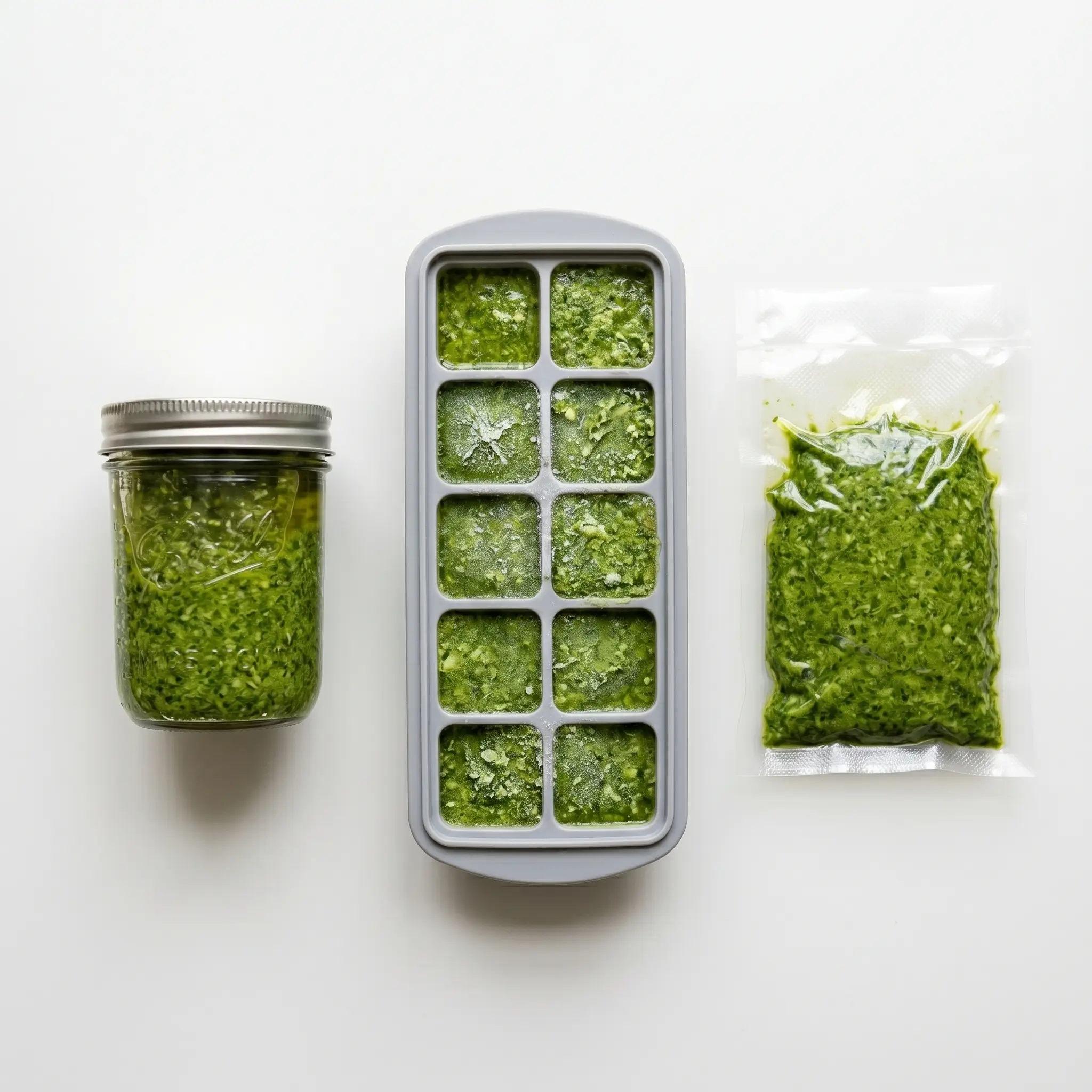
A complete guide to pesto storage methods and their expected freshness windows
| Storage Method | Duration | Color Preservation |
|---|---|---|
| Fridge, no oil layer | 1 to 2 days | |
| Fridge, with oil layer | 5 to 7 days | |
| Fridge, oil + plastic wrap | Up to 7 days | |
| Freezer, ice cube method Best | Up to 3 months | |
| Vacuum sealed, fridge | Up to 10 days |
For meal preppers and batch cookers, the freezer ice cube method is hands-down the best way to store homemade pesto long-term. It lets you grab exactly what you need, when you need it, with zero waste and maximum freshness every time.
Final Thoughts
Now you have everything you need to keep pesto green, fresh, and full of flavor for up to 7 days in the fridge and 3 months in the freezer. The secret is not complicated: a combination of blanching, lemon juice, a protective olive oil seal, and smart container choices is all it takes to prevent pesto oxidation and enjoy that brilliant green color every single time you open the jar.
Stop letting beautiful homemade pesto go to waste. Try these techniques with your next batch and you will immediately notice the difference. If you found these pesto green color tips helpful, share this post with a fellow food lover or leave a comment below with your favorite pesto hack. We would love to hear from you!
Craving more kitchen tips and tested recipes? Explore RecipeTastyBites.com for more flavor-packed ideas delivered straight to your table.
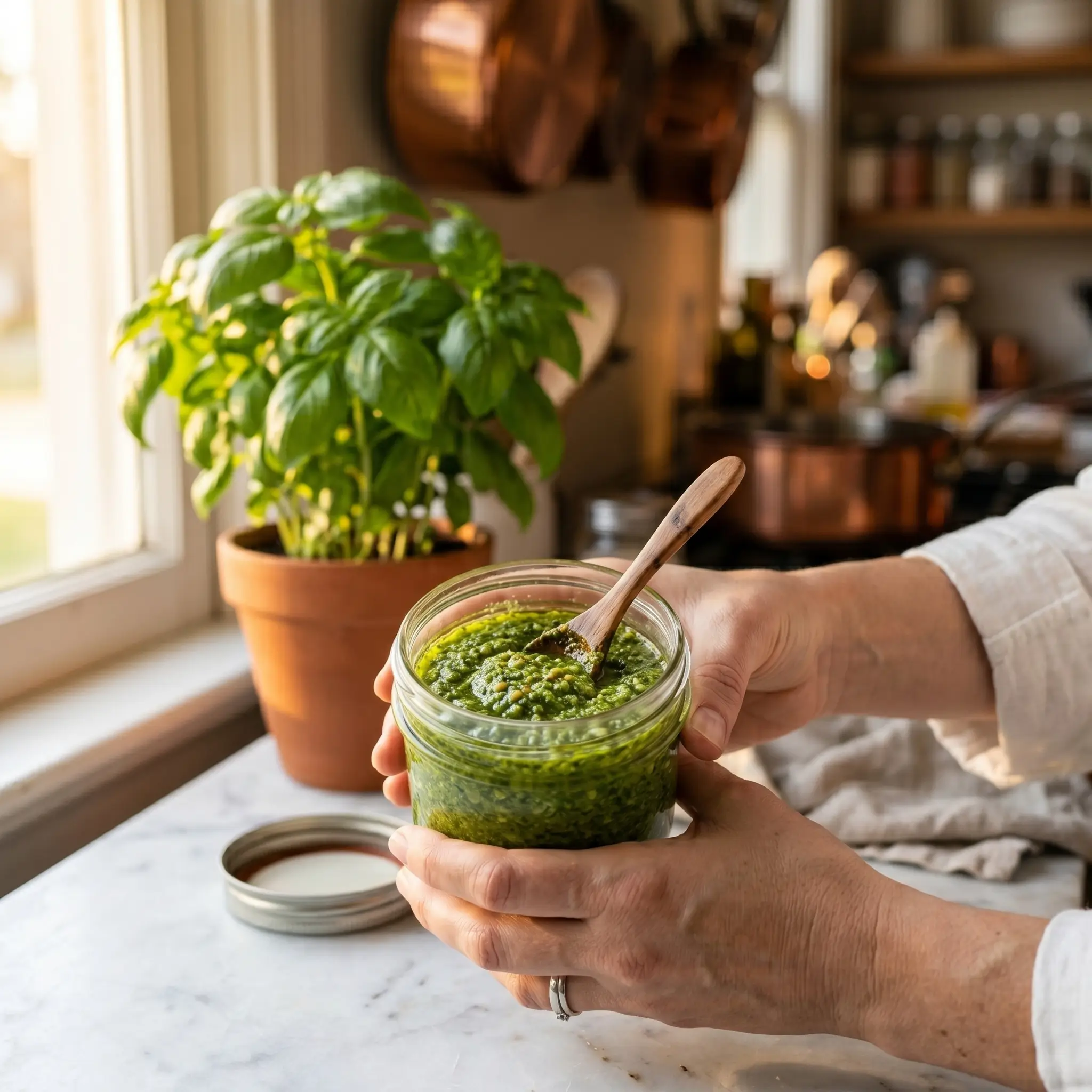
Recipe Card: How to Keep Pesto Green (Quick Reference)
🌿 Key Steps at a Glance
-
1
Blanch basil leaves for 15 seconds, then immediately transfer to an ice bath
🔥 Stops enzymatic browning -
2
Add 1 tsp lemon juice per cup of pesto before blending
🍋 Natural antioxidant -
3
Smooth surface flat and seal with a thin, even olive oil layer
🫒 Creates air barrier -
4
Press plastic wrap directly onto the pesto surface before sealing
🛡 Double air barrier -
5
Seal pesto in an airtight glass container with a tight-fitting lid
🫙 Glass is best -
6
Store in the coldest part of the fridge, on the back shelf
🌡 34 to 38F ideal -
7
Freeze in ice cube trays for storage beyond 7 days
🧊 Lasts up to 3 months
Pro Tip: After every use, re-apply a fresh olive oil layer before returning the jar to the fridge. This single habit is the most effective way to keep pesto green day after day.
Frequently Asked Questions
Why does pesto turn brown so quickly ?
- Pesto turns brown due to enzymatic oxidation. When basil is blended, enzymes called polyphenol oxidases are released and react with oxygen in the air, causing rapid discoloration. Heat, light, and air exposure all accelerate this process.
Does lemon juice really help keep pesto green ?
- Yes, absolutely. Lemon juice contains ascorbic acid (Vitamin C), which is a natural antioxidant. It competes with oxygen at the enzyme reaction sites, slowing the browning process significantly. Even a small amount makes a measurable difference in color preservation.
Can I use spinach to keep pesto greener longer ?
- Definitely. Spinach contains lower levels of polyphenol oxidase than basil, making spinach-based or spinach-blended pestos naturally more color-stable. Adding even a small handful of spinach to your basil pesto can noticeably extend its vibrant green color without significantly altering the flavor.
Is it safe to eat pesto that has turned brown ?
- In most cases, yes. Brown pesto is not necessarily spoiled. The discoloration is primarily a cosmetic change caused by oxidation, not bacterial growth. However, if the pesto smells off, has a slimy texture, or shows signs of mold, it should be discarded immediately.
What is the best container for storing pesto ?
- An airtight glass jar with a tight-fitting lid is ideal. Glass is non-reactive, does not absorb odors, and provides a better seal than most plastic containers. Choose a jar that is the right size for your batch so there is minimal air space above the pesto.
Can I freeze pesto in a regular zip-lock bag ?
- Yes, though the ice cube tray method is more practical for portioning. If using a zip-lock bag, press out as much air as possible before sealing, lay the bag flat to freeze, and break off portions as needed. Freezing in thin, flat layers maximizes surface area and speeds up thawing.
How long does store-bought pesto last once opened ?
- Most opened store-bought pesto lasts 5 to 7 days in the fridge following the same principles: add an olive oil seal on top, use an airtight container, and store in the coldest part of your refrigerator. Always follow the manufacturer date guidelines as a baseline.
Your Feedback Helps Us Grow!
There are no reviews yet. Be the first one to write one.